RPS // Blogs // Mobile-First Design: Stop Squeezing Desktop Into Phones
Mobile-First Design: Stop Squeezing Desktop Into Phones

Mobile devices account for 59.7% of global web traffic in 2025. That’s not a trend anymore. That’s reality. Yet teams still design for desktop first, then cram everything into mobile viewports. This creates terrible experiences and costs you customers.


Mobile-first design isn’t about mobile devices. It’s about starting with constraints that force better decisions. When you design for the smallest screen first, you prioritize what matters. Then you enhance for larger screens.

Why Desktop-First Design Fails

Desktop screens are forgiving. You have space to add another column, another button, another feature. This creates bloated interfaces full of things users don’t need.


Mobile screens are ruthless. Every pixel counts. Every element competes for attention. This forces you to make choices: What’s essential? What can wait? What should we cut?


Teams that design desktop-first make different choices. They include everything, then remove features
for mobile. This creates a lesser mobile experience. Mobile users get the “diet” version of your product.


Mobile-first flips this. You build the core experience for mobile, then enhance for desktop. Desktop users get everything mobile users get, plus bonus features. Nobody gets a worse experience.

The Business Case

Mobile users convert differently than desktop users. They’re often on-the-go, distracted, using one hand. Your design needs to accommodate this reality.


Companies that optimized for mobile saw conversion increases of 20% to 62%. Amazon increased mobile conversions by 20% after mobile optimization. That’s real money from design decisions.

Google switched to mobile-first indexing in 2018. Your mobile site determines your search rankings. A bad mobile experience means lower rankings, less traffic, fewer customers. Mobile-first isn’t optional if you want to be found online.

Performance Matters More on Mobile

Mobile users abandon sites that take longer than three seconds to load. 53% of them. Performance isn’t a feature. It’s a requirement.


Mobile-first design forces performance optimization from the start. You design with slow networks and
limited data in mind. You optimize images. You minimize JavaScript. You prioritize critical content.


This benefits everyone. Desktop users get faster experiences too. Performance is universal. But mobile constraints force you to care about it.

Touch Targets and Thumb Zones

Fingers are bigger than mouse cursors. This seems obvious, but teams forget it constantly. Buttons that work fine with a mouse are impossible to tap accurately on mobile.


Minimum touch target size is 44×44 pixels . Smaller than that, users miss. They tap the wrong button. They get frustrated. They leave.


Thumb zones matter. Users hold phones in specific ways. The bottom third of the screen is easy to reach. The top corners require hand adjustments. Put important actions where thumbs naturally land.


Instagram nails this. Navigation sits at the bottom. Primary actions are thumb-accessible. The app feels natural because it’s designed for how people actually hold phones .

Content Hierarchy on Small Screens

Desktop lets you show everything at once. Mobile forces progressive disclosure. Users scroll, tap, and reveal content gradually.


This changes how you structure information. Your mobile-first design needs clear hierarchy. Most important content first. Secondary content below the fold or behind taps.

Google’s mobile search is masterful at this. Search results show just enough information to be useful. Tap for more. This reduces visual clutter while keeping everything accessible.

Forms on Mobile

Forms are painful on mobile. Small keyboards. Autocorrect mistakes. Difficult field navigation. This
makes every form field a potential exit point. Minimize form fields. Every field you remove increases completion rates. Ask only for essential information.

Use appropriate input types. Email keyboards for email fields. Number pads for phone numbers. This
reduces errors and speeds completion. Show helpful error messages. “This password needs at least one number and one special character” beats “Invalid password”. Starbucks streamlined their mobile order forms. The result: higher completion rates and more orders. Small changes, big impact.

Navigation Patterns That Work

Desktop navigation sprawls horizontally. Mobile navigation can’t. You need different patterns: hamburger menus, bottom tabs, priority-plus navigation.


Bottom navigation works best for apps. Thumb-accessible. Always visible. Clear options. Instagram, Twitter, and TikTok all use bottom tabs for a reason.

Hamburger menus work for secondary navigation. Don’t hide your primary actions in hamburgers. Users don’t always tap them. Keep critical features visible.

Priority-plus navigation shows important items, hides others behind a “More” button. This balances
visibility with space constraints.

Testing on Real Devices

Designing in desktop browsers lies to you. Emulators approximate mobile experiences. Real devices show truth.


Test on phones with small screens. Test on tablets. Test with one hand while standing. Test on slow networks. Test in bright sunlight. Test how users actually use your product.


Duolingo tests religiously on actual devices. This obsession with real-world conditions created a 40% increase in mobile lesson completion rates. Testing reveals problems. Problems fixed before launch save customers.

Progressive Enhancement

Start with core functionality working everywhere. Then add enhancements for capable devices. Your base experience works on the oldest phone with the slowest network. Then you detect capabilities and add features: animations, advanced layouts, richer interactions.


This ensures nobody gets a broken experience. Low-end Android users in emerging markets access the same content as iPhone users in New York. The presentation differs, but the functionality works.


Mobile-first design respects your users’ reality. Most of them browse on phones. Many have slow connections. All of them deserve experiences that work. Design for their constraints first, enhancements second.

RPS // Blogs // Why Design Systems Actually Save You Money (And Your Sanity)
Design Systems: Connected building blocks illustration

Design systems scare people. Teams think they’re bureaucratic nightmares that slow everything down. They’re wrong.


Three out of four enterprise teams use design systems across their entire organization in 2025. Why? Because design systems make teams 34% faster at completing design work. That means if you have a team of ten designers, a good design system gives you the output of 13.4 designers. You just added three free people to your team.

What Design Systems Actually Do

Design systems aren’t style guides. They’re not component libraries sitting in Figma collecting dust. They’re living blueprints that answer one question: “How do we build this?”

When your team asks “What button style do we use for primary actions?” the design system answers.

When developers ask “What’s the spacing between these elements?” the design system answers.

When a new designer joins and asks “Where do I start?” the design system answers.


This eliminates the design-by-committee nightmare. No more Slack threads about button radius. No more meetings to discuss if this blue or that blue. The system decides, and everyone moves forward.

The Real Cost of Not Having One

Let’s talk money. When every designer creates buttons from scratch, you waste time. When developers can’t find the right component, they build it again. When QA finds inconsistencies, they file bugs. When customers see three different navigation patterns, they get confused and leave.

A 2024 study tracking design system adoption found teams without systems spent 40% of their time
recreating work that already existed somewhere else. That’s two days every week spent reinventing the wheel.


Companies with mature design systems report 50% faster time-to-market for new features. Your competitors ship twice as fast because they’re not debating border radius.

Building Systems That Actually Work

Bad design systems fail because they’re too rigid or too vague. Good systems give guardrails, not
prison cells.

Start with your most-used components. Buttons. Inputs. Cards. Document them completely: every
state, every variant, every edge case. A button has at least six states: default, hover, active, loading, disabled, error. Document all six.

Make your documentation useful. Don’t write “This is a button.” Write “Use primary buttons for the
main action on a page. Use secondary buttons for alternative actions. Never use more than one primary button in the same section.”


Show code examples. Show design specs. Show what works and what breaks. Make it impossible to use the system wrong .

Tokens: The Secret Weapon

Design tokens are the bridge between design and code. They’re variables that store design decisions:
colors, spacing, typography, shadows. When you change a token, it updates everywhere.


This means your rebrand doesn’t take six months. It takes six hours. Change the primary color token
from blue to green, and every button, link, and icon updates automatically.


Shopify uses design tokens across web, iOS, and Android. One source of truth, three platforms. When they update spacing, it syncs everywhere. That’s how you scale without chaos.

The Documentation Problem

Documentation kills design systems. Teams create beautiful systems, then write documentation that
nobody reads.


Fix this by documenting while you build, not after. When you create a component, document it immediately. Explain the why, not just the what. “We use 16px base font size because it’s readable on all devices and accessible for low-vision users”.


Update documentation when components change. Stale docs are worse than no docs. They create confusion and distrust.


Use tools that make documentation easy. Storybook, Zeroheight, or even well-organized Notion pages work. The best tool is the one your team actually uses.

Getting Team Buy-In

The hardest part isn’t building the system. It’s getting people to use it. Start small. Pick one team, one project. Show the value before you enforce adoption. When that team ships faster and with fewer bugs, other teams notice.


Make the system easy to access. If designers need to download files, they won’t use it. If developers
need to copy-paste code, they’ll write their own. Integrate the system into existing workflows. Figma
libraries
. NPM packages. Whatever reduces friction.


Measure impact. Track design time. Track development time. Track bug rates. When you can show that teams using the system ship 30% faster, adoption becomes easy.

Systems That Scale

Small startups don’t need enterprise-level systems. But they do need consistency. Start with basic foundations: color palette, typography scale, spacing system, core components.


As you grow, your system grows. Add complexity when you need it, not before. Airbnb started with a
simple system and evolved it over five years. You don’t need perfection on day one.


The goal isn’t a perfect system. The goal is a system that helps your team ship better products faster. Everything else is secondary.


Design systems work when they solve real problems. They fail when they’re academic exercises.
Build for the team you have, the problems you face, the products you ship.
RPS // Blogs // How I Cut Client Onboarding to 1/60th the Industry Time – And Built a Design Studio That Actually Moves Fast
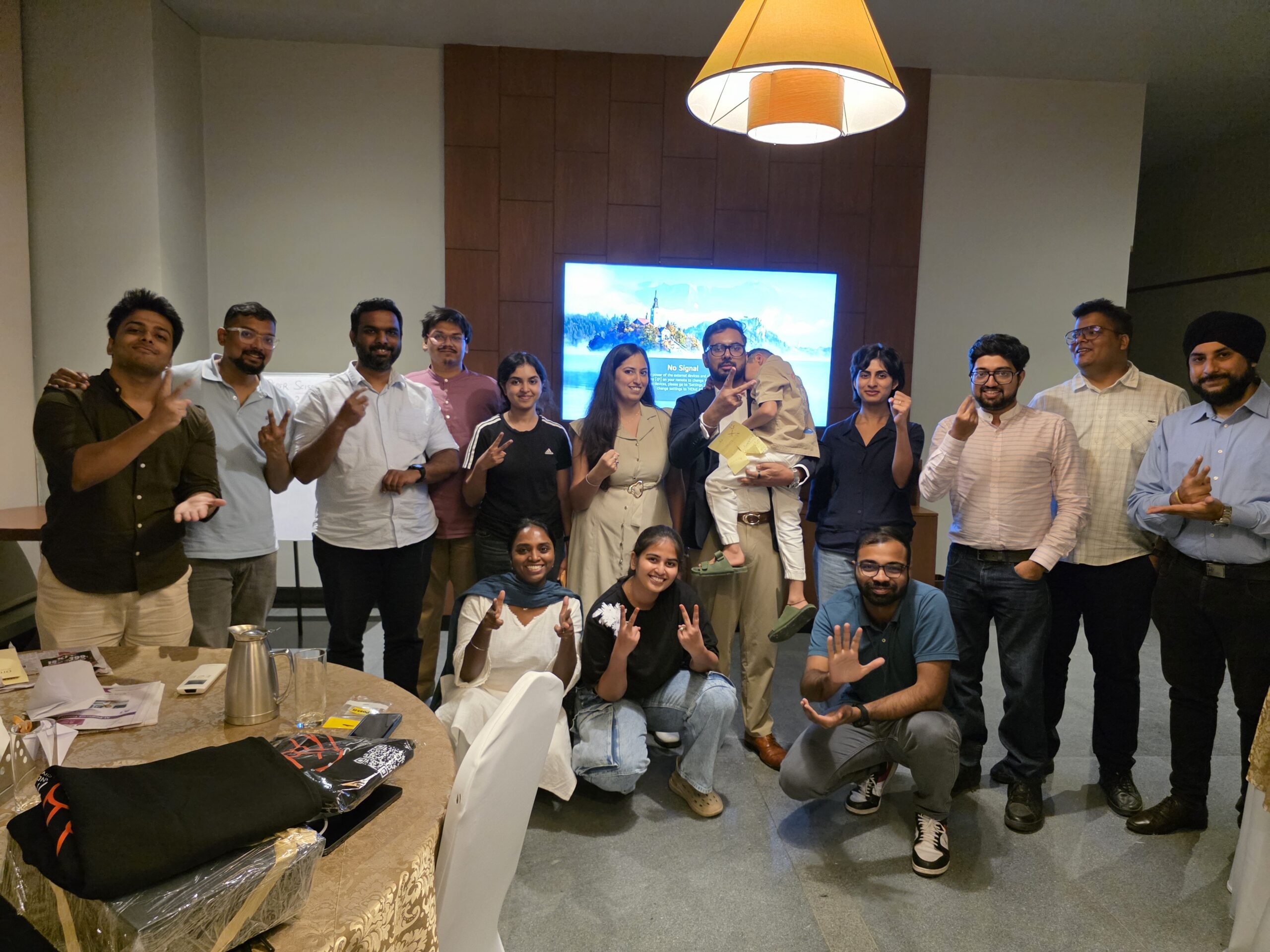
Offsite 2025 Nandi Hill - Presentations, Client Onboarding and get together.

December 2024. I got a WhatsApp at 11:47 PM from a fintech founder I’d never met: “Our users are abandoning the app in 8 minutes. Can you help?”

Most design agencies would have responded with a discovery timeline 4-6 weeks minimum, maybe 8-12 if they’re being “thorough.” They’d schedule stakeholder interviews, conduct lengthy user research, build elaborate presentations, and charge ₹15-25 lakh before a single pixel moved.

I sent back: “We can have insights by Friday and prototypes testing by Monday.”

He thought I was joking. Until we actually did it.

That’s when I realized something most of the design industry hasn’t figured out yet: speed isn’t the enemy of quality. Bureaucracy is.

The Onboarding Crisis Killing Indian Startups

Here’s what nobody talks about: the average design agency takes 6-8 weeks just to onboard a new client. By the time they’ve scheduled kickoff meetings, aligned stakeholders, conducted discovery workshops, and finally started actual design work, most Indian startups have already burned through a significant portion of their runway.

Meanwhile, 68% of Indian fintech users abandon apps during onboarding not because the products are bad, but because the experiences feel like government paperwork. The irony? The agencies hired to fix this problem mirror the same friction in their own processes.

When I founded Rock Paper Scissors Design Studio in 2020 during lockdown, I didn’t set out to revolutionize onboarding. I just couldn’t afford the traditional agency bloat. No fancy office in Bandra. No endless internal meetings. No discovery phases that stretched longer than the actual design work.

What I discovered instead was this: when you remove unnecessary friction from your own operations, you become exceptional at removing it for your clients.

The 1/60th Breakthrough Nobody Expected

The math is simple but shocking. Traditional design agencies typically take 8-12 weeks from contract signing to delivering initial concepts. That’s roughly 60 business days.

Rock Paper Scissors Studio delivers strategic insights, initial prototypes, and actionable design directions in 1 day.

One day versus sixty days. That’s the 1/60th onboarding time advantage.

But here’s the critical part: this isn’t about cutting corners or rushing quality. It’s about eliminating the organizational theater that masquerades as “process.”

What We Eliminated (And What We Kept)

Most agencies drown in ceremony:

  • Week 1-2: Kickoff meetings and stakeholder alignment
  • Week 3-4: User research and competitive analysis
  • Week 5-6: Workshops and ideation sessions
  • Week 7-8: Internal reviews and presentation prep
  • Week 9-12: Finally, some actual design work

We flipped the script entirely.

Day 1: Deep-dive strategy call. We extract every critical insight about their business, users, pain points, and goals in 60-90 minutes. No fluff. No corporate small talk. Just strategic questions that matter.

Day 2-3: AI-powered research and competitive analysis. While traditional agencies schedule research meetings, we’re already analyzing user behavior patterns, mapping friction points, and identifying opportunities.

Day 4-5: Initial concepts and prototypes. Not polished presentations working prototypes that clients can actually interact with and test.

By the time traditional agencies are still scheduling their second stakeholder alignment meeting, we’ve already delivered testable solutions.

The Secret Nobody Talks About

The real breakthrough isn’t speed. It’s intelligent automation married to human expertise.

At Rock Paper Scissors Studio, we use AI to handle the 40% of design work that’s repetitive: research aggregation, pattern analysis, competitive benchmarking, asset preparation. That frees our designers to focus entirely on what actually requires human intelligence: understanding psychology, removing friction, and crafting experiences that feel effortless.

This is what Shivendra Singh, our CEO, calls “design-systems thinking” building frameworks that scale efficiently without sacrificing craft.

From Mumbai to Bangalore: The Distributed Advantage

Operating across four cities Bangalore, Mumbai, and Delhi gives us another unfair advantage. While traditional agencies waste 2-3 hours daily in commutes and office politics, our distributed team operates 35% more efficiently.

No meetings for the sake of meetings. No office drama. Just focused execution.

This model also cuts our operational costs significantly, which means we can deliver the same quality as ₹20-30 lakh agency projects for half the cost and in a fraction of the time.

Real Client, Real Results

October 2025. Qualtech Edge, a BFSI platform that had been innovating for two decades, approached us with a rebrand challenge. They were launching Qualtech 2.0 at Global Fintech Fest 2025 and needed a complete identity transformation, new logo, new website, marketing collaterals, and boardroom presentations. Traditional agencies quoted 12-16 week timelines. We delivered a launch-ready brand in a timeline that felt like fintech speed, not agency speed, applying the same 1/60th onboarding time principles that reduce client friction across everything we build.

The Formula That Changed Everything

Here’s what makes the 1/60th onboarding time methodology work:

Smart Research at Scale: We analyze thousands of user sessions using AI, understanding behavioral patterns across different states, languages, and demographics insights that would take traditional agencies weeks to compile.

Rapid Prototyping Without the Theater: We test 10 design variations in the time traditional agencies produce one polished presentation. We’re optimizing for learning speed, not presentation aesthetics.

Predictive UX Powered by Data: Machine learning trained on Indian fintech patterns helps us design for Bharat, not just metro India. We’re solving problems before clients even articulate them.

Compliance Automation: AI handles Aadhaar verification, PAN validation, and GST compliance checks while keeping the frontend beautifully simple.

The Results Speak Louder Than Process Documents

Across Fortune 500 brands, fintech unicorns, and bootstrapped SaaS companies, the pattern repeats itself:

  • Mumbai insurance platform: Onboarding reduced from 45 minutes to 8 minutes
  • Lending apps: Completion rates increased 340%
  • Pune wealth platforms: Customer Acquisition Cost cut by 45%

One breakthrough project involved a lending platform targeting tier-2 and tier-3 cities. Traditional agencies quoted ₹18 lakh and 10 weeks. Using AI-powered behavior analysis, Rock Paper Scissors Studio mapped drop-off points in 48 hours and rebuilt the entire experience.

Results after 30 days:

  • Bounce rate: 87% → 12%
  • Conversion rate: 2.3% → 23.7%
  • Loan approval time: 3 weeks → 2 hours
  • CAC: ₹847 → ₹127

That’s ₹60,000 saved per 100 customers, the difference between startup survival and shutdown.

Why This Matters Beyond Speed

Indian startups don’t have the luxury of slow design. Funding cycles are tightening. Competition is intensifying. User expectations are rising.

When we deliver 1/60th onboarding time, we’re not just saving weeks on a calendar. We’re preserving the runway. We’re accelerating time-to-market. We’re giving founders the velocity they need to test, learn, and iterate before their competitors catch up.

Shivendra Singh puts it simply: “Indian startups don’t have the luxury of slow design. Markets move fast. Funding dries up fast. You either deliver speed with intelligence, or you become irrelevant.”

The Philosophy That Drives Everything

At Rock Paper Scissors Design Studio, we believe design should never be the bottleneck. It should be the accelerator.

That means:

  • No politics, no micromanagement, no egos just space where creativity thrives
  • Remote-first culture that prioritizes output over office attendance
  • Design with purpose: solving real problems, creating real change
  • Velocity married to intelligence, never one at the expense of the other

The Future Is Already Here

The 1/60th onboarding revolution isn’t approaching; it’s already disrupting how forward-thinking companies build digital products.

The question for founders, CTOs, and product leaders: Will they adapt to this new velocity? Or will they continue scheduling discovery calls while competitors launch, test, and iterate?

At Rock Paper Scissors Studio, we’ve already made our choice. We’re building faster, smarter, and more efficiently than the industry thought possible.

And we’re just getting started.

RPS // Blogs // Select the Best A/B Testing Tool for UI/UX Design and Deliver Quality Work
Select the Best A/B Testing Tool for UI/UX Design and Deliver Quality Work.

Top UX Trends for 2025 A Glimpse into the future

A/B testing is a method of comparing two different versions of a webpage or an advertisement by randomly showcasing them before audiences. The one with more engagement is chosen over the other.
A/B testing helps UI/UX designers gather statistical data based on user choice. UI/UX design becomes more engaging rather than designing based on the opinions of the designer.
As the testing process involves user inputs, it can provide a better user experience. 

Let’s focus on some of the top-tier A/B testing tools for UI/UX designers. 

Top 5 Tools for A/B Testing 

Approximately 33% of companies that are at the highest level of success are running A/B testing for more than a year. It suggests that they have better ROI for A/B testing. 

Here are the top 5 tools for you to run A/B testing as a UI/UX designer.

Tool 1: Optimizely
A/B testing and multivariate testing are some of the crucial tests you can perform on Optimizely. It is a great tool for User Experience (UX) designers to experiment with UI/UX designs.

Key Features
You can run Optimizely for an unlimited time with different variables. It can run concurrent experiments with different variables. Any person without a degree in coding can use the tool to their benefit.
To perfect your UI/UX design as per your target audience, you can manually select customer age, locations, and other data. It helps to improve your decision-making process.

How It Helps UI/UX Designers

UI/UX designers can base their selection on solid customer engagement statistics using Optimizely. Besides, designers can explore their creativity with the feature of conducting unlimited concurrent experiments. 

Pros and Cons
Pros:
You can even use Optimizely WYSIWYG editor without any coding knowledge
It’s so easy to use that a person from the marketing team could also use it by providing relevant information. Easy to understand statistics and graphs for better understanding of the test
The dashboard of the tool is easy to use, it shows test insights helping developers decide

Cons:
The cost of the tool may be expensive for new or small to medium business organizations.
If you upload heavy code, it may slow down and take some time to load
The HTML editor panel sometimes crashes and shows the first few lines of the code.
Sometimes it is difficult to connect the tool with Google Analytics

Our verdict

Use Optimizely if you do not have an issue with its expensive pricing. However, it is a great option for developers to experiment with their creative ideas. But be careful with the volume of commands, it may crash with too much pressure.

Tool 2: VWO (Visual Website Optimizer)
A/B testing and optimizing conversions are two of the excellent features of the VWO platform.

Key Features
User-friendly UI is the most attractive feature of the platform. Anyone with no experience in coding or technical knowledge may find the platform useful. Users can easily run tests by changing small features like changes in headlines, image alterations, and others. 

How It Enhances User Experience

The visual editor of the platform is great for editing and running tests, reducing time for development. The easy-to-use editing and testing features allow users to act without the help of professional developers.

Pros and Cons
Pros:
It not only conducts A/B testing but also channels traffic to the best-performing sites through split URL testing
Non-technical team members can also join the developer in editing UI/US design because it has a user-friendly interface
To evaluate the eligibility of a user as a targeting audience, VWO has a feature called “check once” or “check continuously”

Cons:
It requires a large number of visitors to conduct a test and find a result
Its findings are not accurate in terms of A/B testing, rather it shows “likeliness to beat control”
You cannot easily calculate the total number of days the test has been conducted on the platform

Our verdict

The platform is suitable for small businesses at a growing stage. Any non-technical personnel can run small and easy changes. But complex editing may require expertise and more time.

Tool 3: Google Optimize
When it comes to offering tools to improve the personalized experience of users, Google Optimize is the tool you turn to.

Key Features
The tool is integrated with Google Analytics, helping you to learn about effective test results. The tool offers a no-code visual editor as well as options for professional coders to use advanced code editors.

Benefits for UI/UX Designers

UI/UX designers can create two different HTML to present different options. The tool can help identify the content that is performing better. It uses Bayesian statistics to accurately calculate test results.

Pros and Cons
Pros:
Unlike other tools mentioned above, Google Optimize is free to use. You don’t need to pay anything to use the tool. 
No coding knowledge is necessary for its usage. However advanced features are there for professionals to use code editors.
It provides a flicker-free experience during client-side testing. It also offers server-side testing.

Cons:
It has a limit over simultaneous experiments
Google Optimize does not allow script length of codes beyond 10240
There is no customer support for the free version – Google Optimize, unless you upgrade to Optimize 360
You won’t get the segmentation feature to test your target audience through A/B testing

Our verdict

Before committing to a paid version of any A/B testing tool, try Google Optimize. Try out its features first. It should be enough for you if you are starting your business.

Tool 4: Freshmarketer
It is another option for UI/UX designers to conduct A/B testing with their website designs.

Key Features
It lets the designers test different versions of the website and run A/B testing. It helps them to determine the most engaging version of the web design. Besides, the tool offers segmentation of target audiences helping web designers improve customer experience.

How It Improves Conversion Rates
The tool offers split testing which lets designers know the most effective web design. Based on the result, the designers can improve the conversion rate for the site.

Pros and Cons
Pros:
A heat map is one of the excellent features by Freshmarketer
The customer support team provides assistance all the time
Session reply from customers is an excellent feature of the tool, providing a unique view of customer interaction 

Cons:
The tool does not offer different internal tests
The free plan is too basic for customers to conduct A/B testing and related activities

Our verdict

You can go for Freshmarketer if you prefer using features like heat maps and replay customer sessions. It will help you identify areas that customers prefer. You can give it a try and if you run into any trouble, their customer support will be able to help you.

Tool 5: Adobe Target
Adobe Target can be a great tool to conduct A/B testing for multiple channels.

Key Features
You can use Adobe personalization, A/B and multivariate testing to provide a better experience to customers. Based on the test result, you can customize the user experience.

Why UI/UX Designers Choose Adobe Target
Adobe Target also splits traffic into two versions of web pages or mobile app elements. Then compare the engagement level among those two. The designer can then decide on keeping the better-performing version.

Pros and Cons
Pros:
Its report tells you the number of visitors, visitors’ countries, etc.
You can create a target audience based on their country, region and others
The tool is easy to use for people with no coding skills

Cons:
Customer support is not that helpful at all
The area to write text is small, so it can be challenging for designers to write codes on the tool
Targeting audiences from a geographical area is only limited to the paid version

Our verdict

If you want to pay a good amount for the paid version of the tool, then it can be useful for your campaigns. Use the tool if you conduct business internationally as it will allow you to view visitors from around the world. 

Conclusion
When it comes to choosing the best A/B testing tool for UI/UX designers, free tools top the user choice list. Especially if it comes from Google itself. We also suggest you try Google Optimize. 
You don’t need coding knowledge to operate the tool. Another benefit of the tool is its flicker-free experience during testing. 


However, if you want to try another tool, use the VWO A/B testing tool. User-friendly interface is what attracts customers to use the tool. 


A/B testing is a great way to improve your customer experience as it involves making decisions on solid statistics. Users also contribute to the UI designing process. Ultimately user experience helps to improve how customers feel visiting your websites. Hence, A/B testing is valuable to UI/UX designers. 

RPS // Blogs // The Future of UX What’s Driving Change in 2025
The Future of UX What’s Driving Change in 2025

The Future of UX: What’s Driving Change in 2025

As technology evolves and user expectations rise, UX design is entering a new era. In 2025, the focus is on creating smarter, more intuitive, and sustainable experiences. From AI-driven personalization to eco-conscious design, here’s how UX is being redefined.
 
Chatbots Everywhere: The Future of Seamless UX
Chatbots are transforming user interactions, now handling over 85% of customer engagements. They provide instant, 24/7 support, enhancing convenience and satisfaction. As AI makes them smarter and more intuitive, chatbots will continue to be a key element of seamless digital experiences.
 
AI-Powered Experiences: Personalization at Its Best
Artificial Intelligence is revolutionizing UX by tailoring content, recommendations, and interactions based on user behaviour. AI not only enhances engagement but also streamlines tasks and boosts efficiency, making digital experiences more intuitive and rewarding.
 
Sustainable UX: Designing for a Greener Tomorrow
With growing environmental consciousness, sustainable UX is gaining momentum. By reducing digital waste, optimizing resources, and promoting eco-friendly practices, UX designers are shaping experiences that benefit both users and the planet.
 
Micro interactions & Animations: Elevating Engagement
Small yet impactful, micro interactions and animations make interfaces more engaging and user-friendly. These subtle elements guide users smoothly through their journey while adding a touch of charm. Animations enhance emotional connections, fostering stronger relationships between users and digital platforms. When executed thoughtfully, they transform mundane interactions into delightful experiences.
 
Looking Ahead
The UX landscape in 2025 is driven by intelligence, sustainability, and engagement. As technology advances, designers play a crucial role in crafting experiences that are not just efficient and seamless but also meaningful and responsible. The future of UX is about connecting users, technology, and the world in more thoughtful ways.