Explore Apple’s ecosystem UX design: Handoff, Continuity, and iCloud sync. Learn how seamless device integration increases user lifetime value.
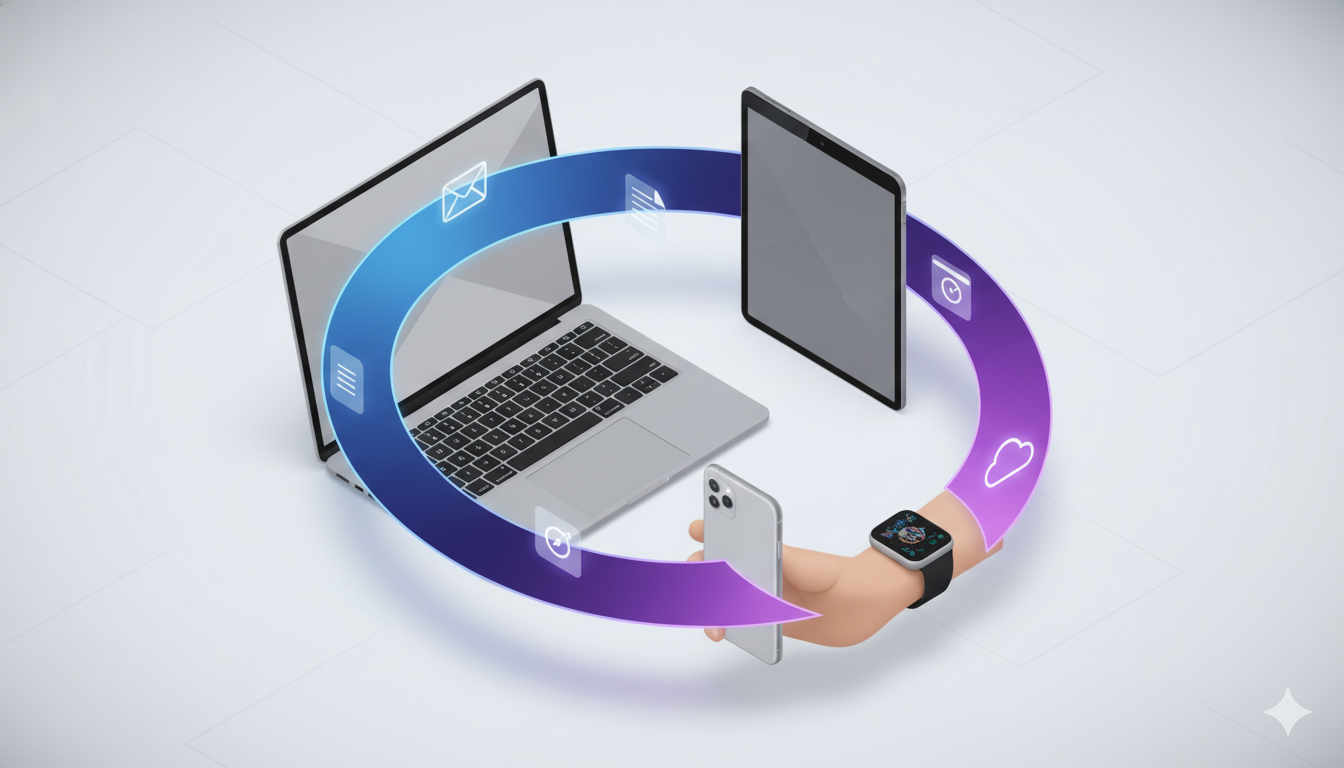
The smartphone era promised liberation—complete access to your digital life, anywhere, anytime. Yet by 2012, a new problem emerged. People didn’t use just one device anymore. They used phones, tablets, laptops, and watches. The friction wasn’t in using individual devices; it was in moving between them. Start composing an email on your iPhone during a commute. Arrive at your desk. Want to finish on your Mac? You’d either send it to yourself, manually copy-paste the text, or restart completely. This fragmentation frustrated power users and demonstrated a critical insight: the future wasn’t about individual devices—it was about seamless experiences across multiple devices.
Apple recognized this wasn’t just a usability problem; it was a competitive opportunity. Samsung offered individual devices. Google distributed them across Android. But Apple owned both hardware and software, meaning they could engineer experiences impossible for competitors. If Apple could make switching between devices feel native and invisible, users would stay locked into the ecosystem not through artificial restrictions, but through genuine convenience. This became the foundation for Apple’s Continuity features—a suite of integrated experiences that transformed the ecosystem from a collection of products into a unified system.
The core innovation was Handoff, introduced with iOS 8 and OS X Yosemite in 2014. The feature allows users to start a task on one device and seamlessly continue on another. Begin drafting a document on your iPad during a meeting. Return to your Mac. Your exact location in that document appears in the Dock—just click it and you’re back where you left off, with full context restored. This sounds simple, but the engineering is profound. Apple had to synchronize app state across devices in real-time, handle network interruptions gracefully, ensure security across device transitions, and design UI that made the feature discoverable without cluttering the interface. Most companies couldn’t coordinate this across their own organization, let alone across multiple platforms.
The magic was in the execution details. Handoff appears as a subtle icon in the Dock on Mac, or in the app switcher on iOS—visible but not intrusive. The transition between devices feels instantaneous because Apple uses Bluetooth Low Energy and iCloud to keep devices in constant lightweight communication. When you tap the Handoff icon, the app launches on your current device with your exact previous state restored. There’s no data loss, no context switching, no friction. Psychologically, this removes the perception that you’re using separate devices—you’re simply continuing work on whichever device is most convenient.
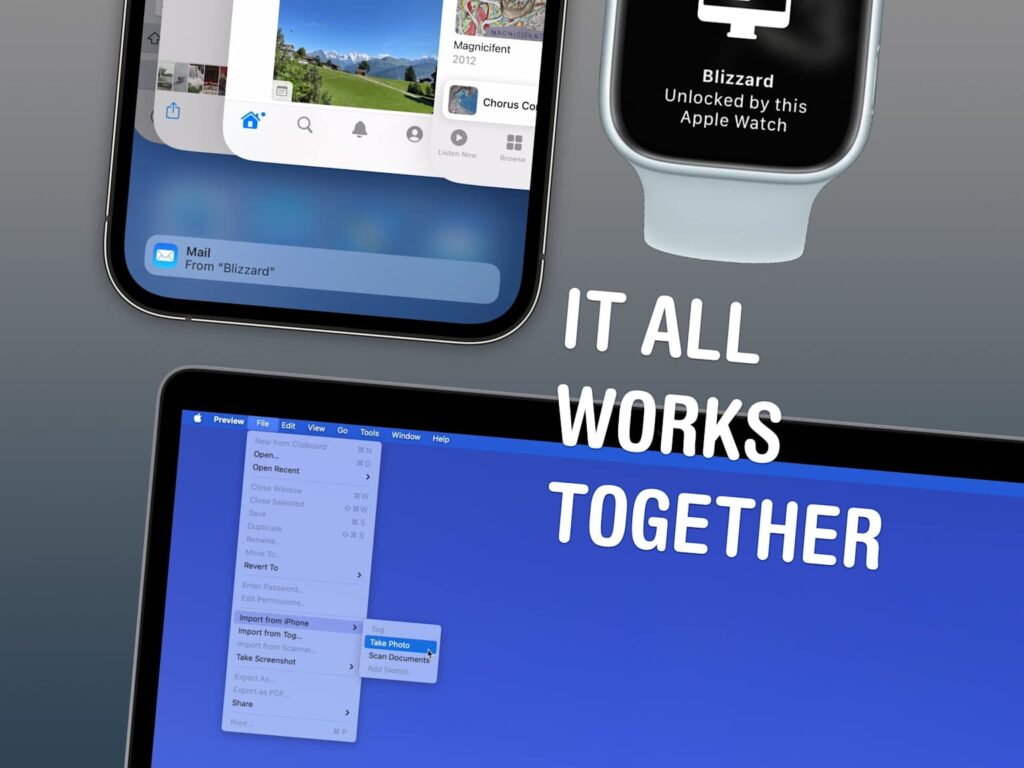
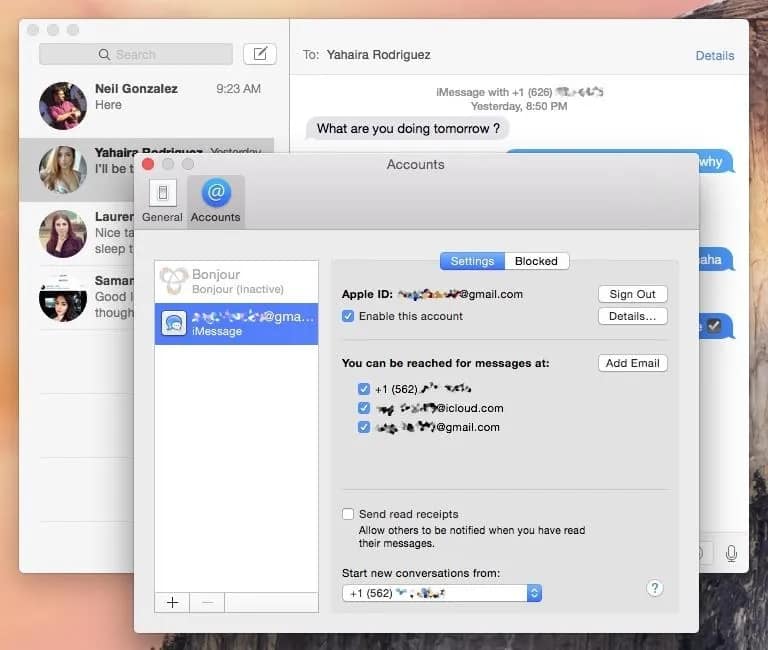
The broader Continuity ecosystem expanded on this principle. Instant Hotspot allows your Mac to automatically connect to your iPhone’s cellular data without manual pairing. Universal Clipboard lets you copy text or images on your iPhone and paste them on your Mac—seamlessly. Handoff calls and messages work across devices, so you can start a call on your Apple Watch and continue on your iPhone without hanging up and redialing. AirDrop enables instant file sharing between any nearby Apple devices using encrypted wireless protocols. Each feature addressed a specific friction point—but together, they created a narrative that choosing Apple meant never thinking about device boundaries again.
The business impact proved substantial. Apple’s ecosystem approach created powerful retention mechanics. Users invested in multiple Apple devices earned increasing returns—each new device added value to the existing devices. This compounding value makes switching to competitors expensive. Microsoft users can move their email and documents to Google Workspace and lose nothing; Apple users face a genuine loss if they switch. This isn’t achieved through forced lock-in, but through genuine experience superiority that emerges from ecosystem integration.
The user research behind Continuity revealed something crucial: people don’t think about devices—they think about tasks. A user preparing a presentation doesn’t want a “Mac experience” and an “iPad experience”; they want a single, coherent presentation experience that happens to leverage multiple devices. Traditional device manufacturers optimized for individual devices; Apple optimized for the task spanning devices. This task-centric thinking guided every design decision. Notifications sync across devices—you don’t get duplicate alerts. Your default apps remain consistent across devices. Your iCloud data stays synchronized automatically, creating a unified information experience.

The Continuity handoff concept inspired competing products like Google’s cross-device computing features and Microsoft’s universal clipboard, validating that Apple had identified a genuine user need. But because Apple controlled the full stack—hardware, OS, and apps—they executed with consistency competitors couldn’t match. A third-party developer building for both iOS and macOS has to manage different code bases, different design guidelines, and different OS capabilities. Apple’s first-party apps (Mail, Notes, Safari, Maps) work identically across all platforms because they share underlying code and design principles.
The security and privacy architecture deserves mention because it’s invisible but critical. Handoff data transmits encrypted between devices. iCloud synchronization uses end-to-end encryption for sensitive data. When you hand off a task containing private information, Apple’s infrastructure ensures that data never exists on unencrypted servers where Apple itself can read it. This technical foundation builds trust—users can hand off anything, from financial records to health data to private messages, knowing the system protects privacy by design.
By 2024, the Apple ecosystem had grown to over 800 million active devices. Continuity features account for a portion of this growth because they make the ecosystem objectively more functional than alternatives. Samsung users with an iPhone cannot access Handoff. Google ecosystem users switching to Apple gain these capabilities. The competitive advantage compounds—each new user who experiences seamless handoff becomes a stronger advocate within their social network.
The UX principle here transcends Apple: Seamless experience across touchpoints reduces friction, but unified design philosophy ensures consistency. Continuity succeeded not because Apple created magical technology (the underlying wireless protocols existed for years), but because they designed comprehensive, coherent features that addressed real user pain points. They treated the multi-device world not as a fragmentation problem but as an opportunity to create differentiation through integration. That’s how a feature that seems invisible—because it works so smoothly you never think about it—becomes one of the most powerful retention mechanics in the tech industry.
Also Read: Amazon One-Click Checkout: The UX Case Study That Revolutionized E-Commerce