Acquire Learning
Acquire Learning is a digital learning and therapy management platform built to support doctors, staff, and behaviour technicians working with children on the autism spectrum.
Overview
Acquire Learning Platform
Acquire Learning focused on redesigning a learning management system for doctors tracking the progress of children on the autism spectrum.
The existing LMS was a legacy platform that made it difficult to understand learning curves, document progress, adapt interventions, and create a clear view of each child's development. The product needed stronger data visualization, real-time insights, customization, and a more intuitive interface for clinical use.
Rock Paper Scissors Studio helped shape a modern, data-driven LMS that could streamline progress tracking, improve reporting accuracy, and support doctors, staff members, and behaviour technicians through clearer workflows.
Role
Turning Therapy Data Into Actionable Progress
Our role was to translate a content-heavy, clinical learning system into a structured digital experience. The platform needed to help doctors understand progress, manage targets, review student history, and adapt therapy programs without working through a rigid legacy interface.
The design challenge was to keep the product flexible enough for personalised therapy while making the everyday workflow easier to follow. The system had to support data, notes, histories, learning programs, staff instructions, and behaviour reduction targets in one connected experience.

Key Challenges
Function-First Workflows Meet User-First Clarity
Challenges
- Progress tracking was difficult to interpret.The legacy LMS lacked intuitive data visualization and real-time insights, making it harder for doctors to assess learning curves and adapt interventions.
- Therapy programs needed more flexibility.Users needed to set up, adjust, and manage learning programs without spending unnecessary time on manual configuration.
- Staff and behaviour technicians needed synced instructions. Therapy support depends on coordination across doctors, staff, and behaviour technicians.
- Each child's development needed a more complete view. Doctors needed more than isolated task data. They needed history, notes, analytics, and personalised learning paths in one place.
Solutions
- We designed the system around clearer student analysis, progress visibility, and structured reporting so doctors could understand development patterns faster.
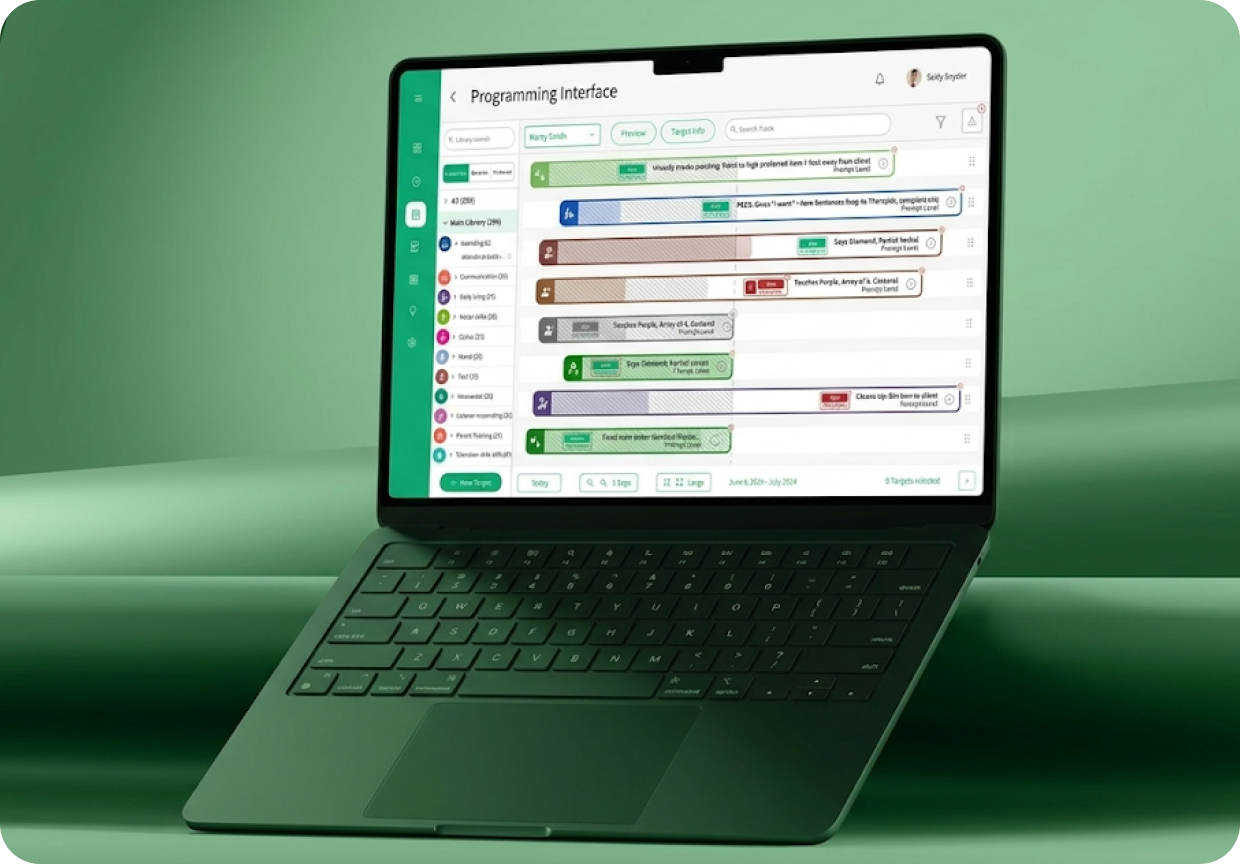
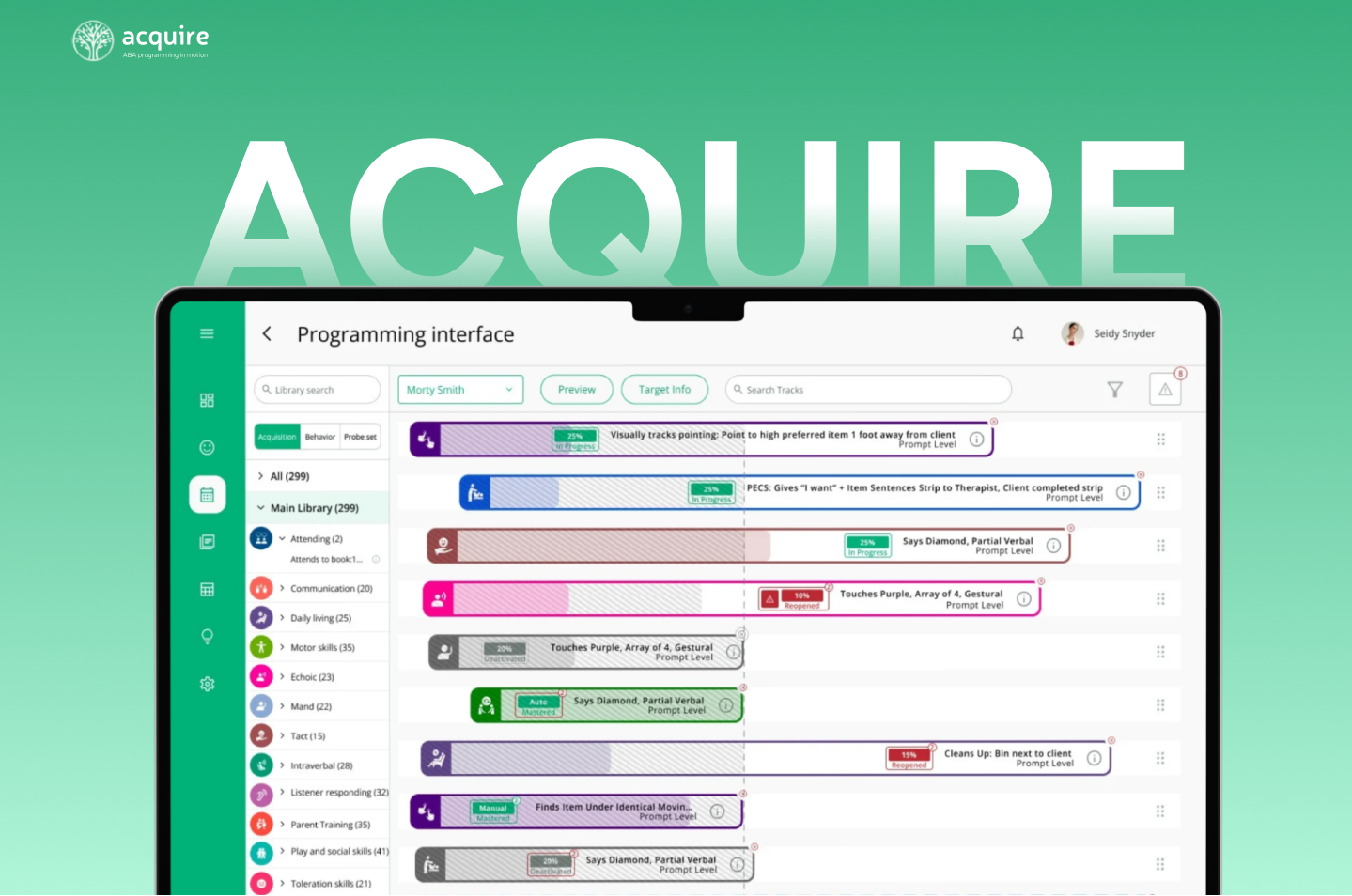
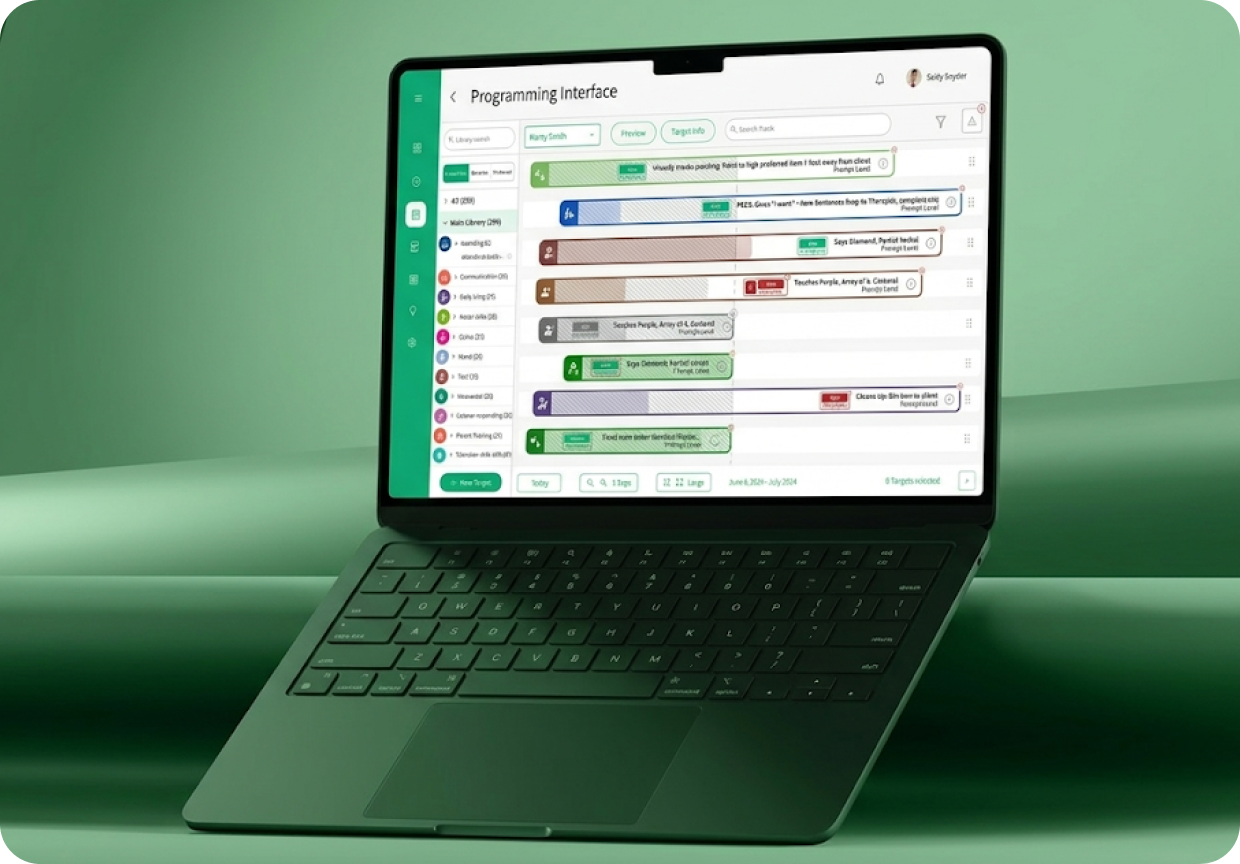
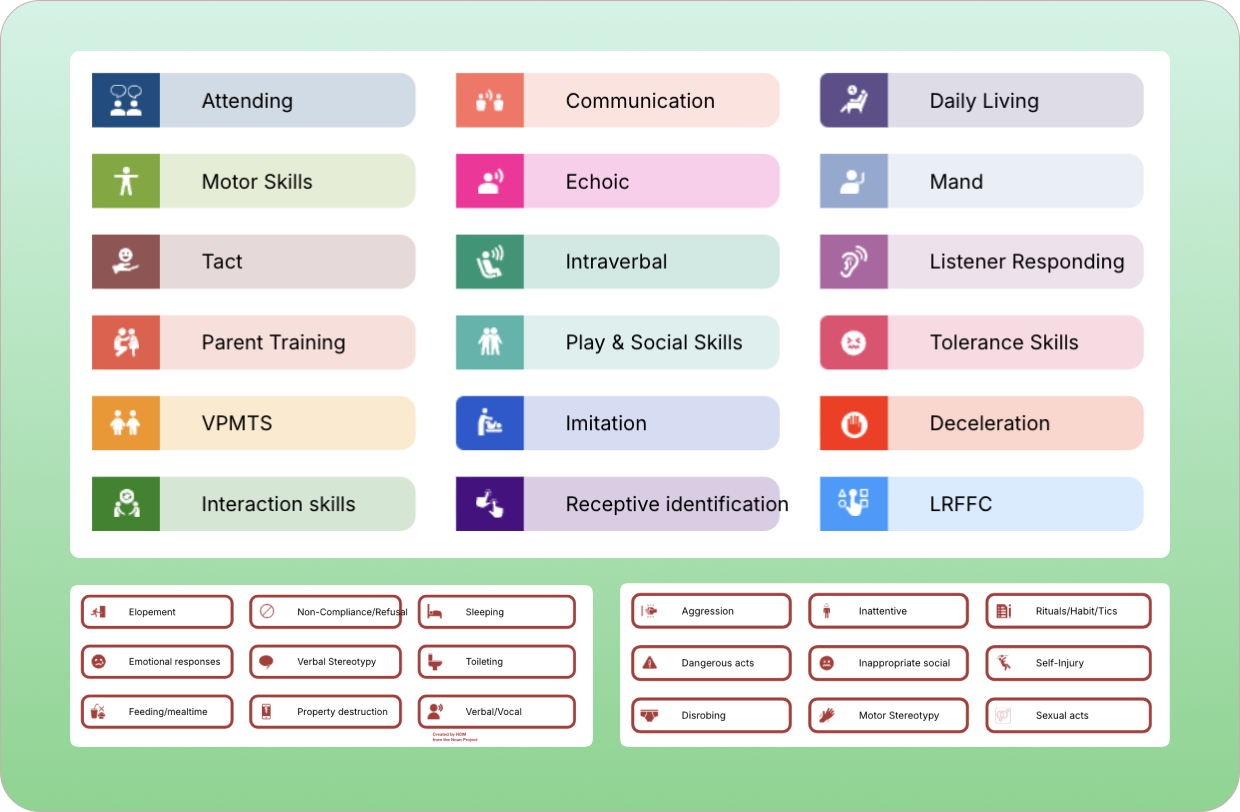
- We introduced drag-and-drop program setup, ready-to-use targets, and a premade library of skill development and behaviour reduction categories.
- Cross-device syncing helped instructions reach staff and behaviour technicians so assigned tasks could be carried out more efficiently.
- The redesign connected notes, history, real-time analytics, and intelligent recommendations into a more comprehensive view of each child's development.
RPS Approach
Built Around Data, Therapy, And Coordination
Our approach followed the same core principle used in complex enterprise redesigns: understand the operations deeply before designing the interface.
1
Understanding the clinical workflow:
We began by studying how doctors and support teams track progress, assign programs, and adapt learning interventions. This helped us identify where the old LMS created friction and where clearer information architecture could support faster decisions.

2
Structuring a flexible learning system
3
Designing for real-time visibility and sync
User Insight & Persona
Doctors, Staff, And Behaviour Technicians
The primary user was the doctor who needed to track progress, understand learning curves, and adapt interventions for each child. Their work depends on reliable data, clear history, and a system that makes changes easy to evaluate.
Behaviour technicians and staff members also played an important role. They needed synced instructions and task clarity so they could help students perform assigned activities effectively.
The redesigned LMS treated these users as part of one shared care workflow. Doctors could see progress and adjust programs, while support teams could receive clearer instructions and carry out tasks with less ambiguity.
Components
A System For Targets, Programs, And Progress
The platform required components that could support clinical data, therapy workflows, and program management without making the interface feel dense.
Key Improvements
From Legacy LMS To Data-Driven Therapy Platform
Real-time progress visibility:
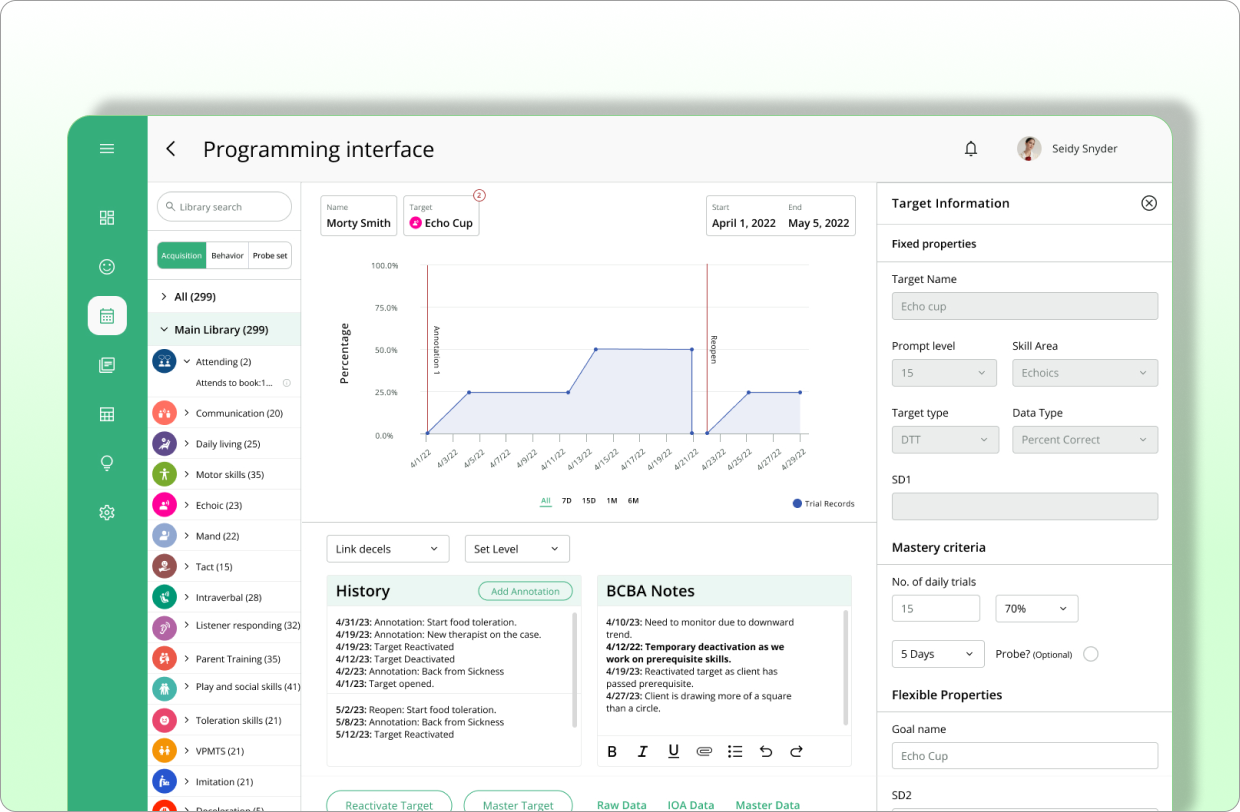
The redesigned LMS made it easier to review student progress and understand how each child was developing over time.
Drag-and-drop program management:
Users could drag programs from the library, assign students, and adjust learning programs with less setup effort.
Personalised learning paths:
The system supported individualised programs and helped teams adapt learning based on what was working.
Cross-device syncing:
Instructions could be shared with staff members and behaviour technicians, helping teams stay aligned around each child's tasks.
Ready-to-use targets:
Premade skill development and behaviour reduction categories helped teams set up programs faster.
Improved reporting accuracy:
Structured data and clearer analysis helped doctors review progress with greater confidence
Refinement
Details That Build Trust
Details That Make Operations Faster and Safer
Student History And Notes:
Notes and history were treated as core parts of the experience, helping users document progress and preserve context over time
Data-Led Recommendations:
The system used data to suggest what skills to teach next based on what was working, turning analytics into practical therapy guidance.
Library-Based Setup:
Ready-made targets and drag-and-drop program tools reduced repeated manual work and made setup easier for teams.
Clear Task Coordination:
Cross-device syncing made instructions easier to share with staff and behaviour technicians, supporting more consistent execution.
Impact
A Faster, Clearer LMS For Therapy Teams
The source case study presents Acquire Learning as a modern, data-driven LMS introduced to streamline progress tracking, improve reporting accuracy, and provide a more intuitive interface for doctors
A comprehensive view of each child's development on a defined growth chart.
Real-time analytics and intelligent insights.
Easier setup and adjustment of learning programs.

Skill acquisition and behaviour reduction target management.
Staff and behaviour technician coordination.
Progress documentation through notes and history.
Wrap-up
From Static Records to Real-Time Progress
The Acquire Learning redesign was more than an LMS interface refresh. It was a shift from a legacy tracking tool to a data-driven therapy platform that helps doctors and support teams understand progress, adjust programs, and coordinate care more clearly.
By combining real-time analytics, reusable target libraries, drag-and-drop setup, notes, history, and cross-device syncing, RPS helped create a system that supports personalised therapy with stronger structure and less manual effort