Overview
Nuvama RTA System
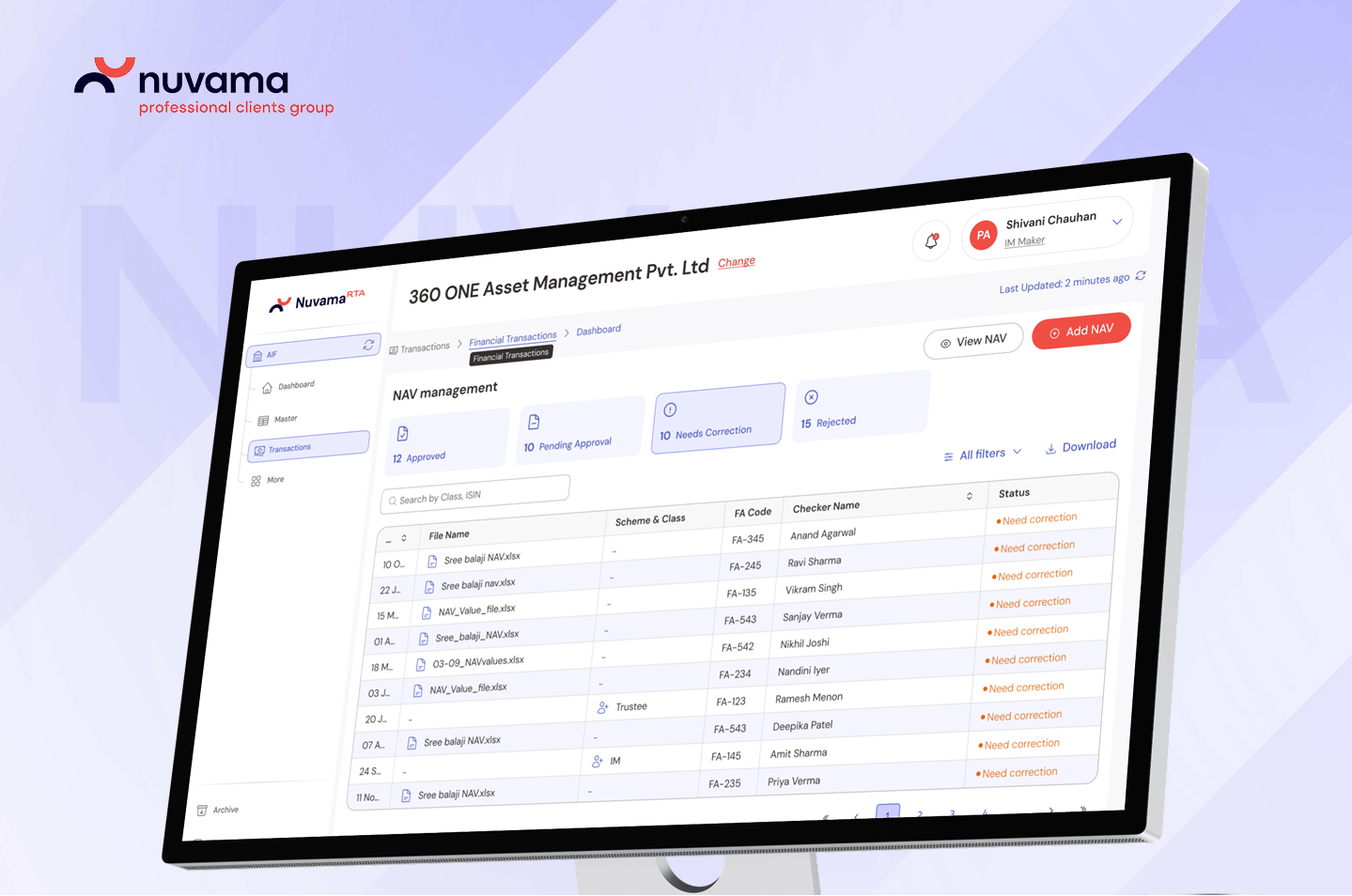
The Nuvama RTA System is a digital platform designed to support Alternative Investment Fund (AIF) RTA operations across the complete lifecycle of fund and investor servicing.
The platform brings together critical RTA processes such as fund setup, scheme and class creation, distributor and broker management, fee configuration, investor onboarding, regulatory checks, unit allotment, reconciliations, drawdowns, distributions, MIS reporting, audit trails, and communication workflows into one structured system.
The objective was not just to digitize forms, but to create a centralized, compliance-ready operations platform where every record is accurate, traceable, validated, and approval-driven.
Role
Designing for Operational Accuracy at Scale
RTA operations are highly data-heavy, compliance-sensitive, and approval-driven. Our role was to understand this complex operational environment and translate it into a system that is easier for operations teams to use every day.
We worked on defining the platform experience across:
- Master entity creation
- Fund, scheme, and class setup
- Distributor and broker onboarding
- Fee and brokerage mapping
- Maker-checker approval flows
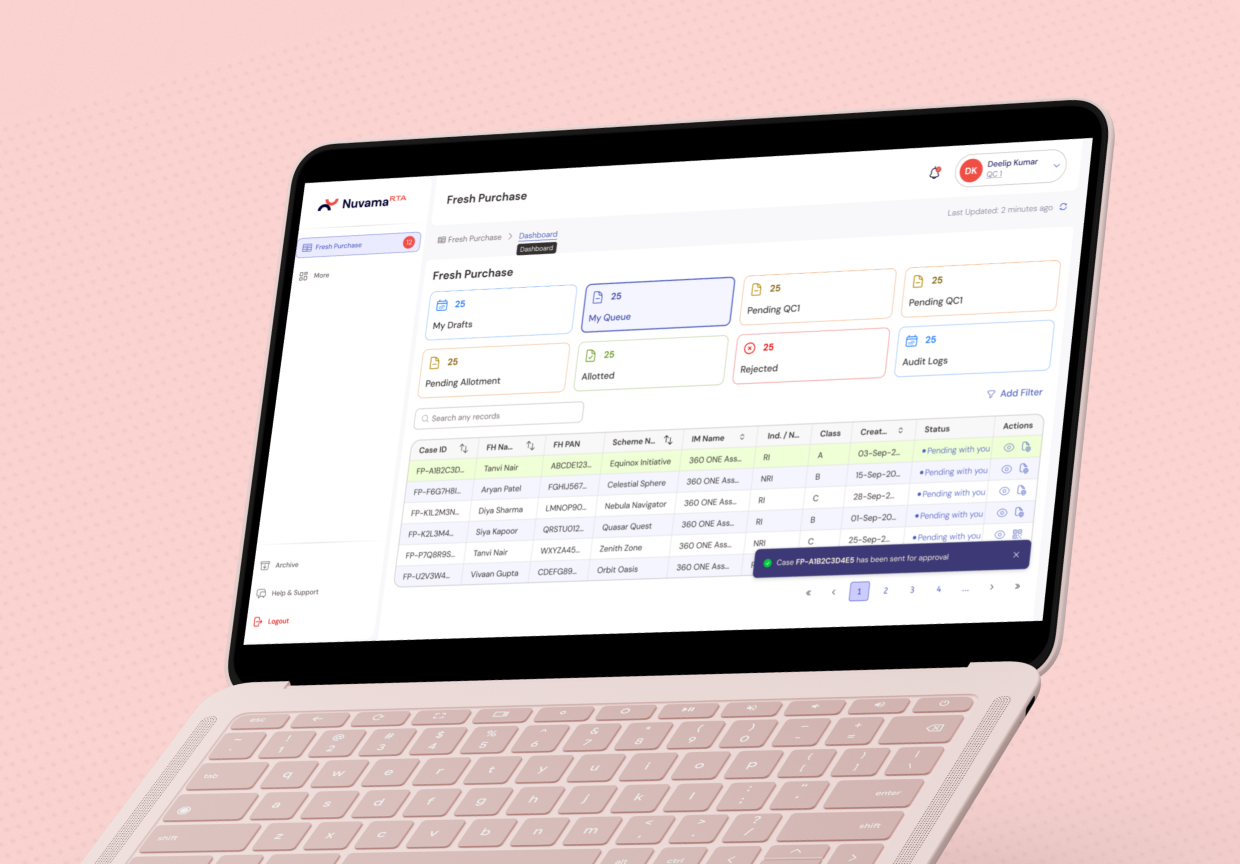
- Dashboards and operational queues
- Compliance and regulatory validation touchpoints
- Audit and reporting journeys
The design needed to balance speed, accuracy, governance, and usability without compromising on regulatory discipline.

Key Challenges
Chaos Meets Simplicity
Challenges
- Complex RTA Operations Were Spread Across Manual and Fragmented Workflows
- Data was difficult to control
- Approvals lacked structured visibility
- Compliance checks were too dependent on manual validation
- Status tracking was not unified
- Reporting and audit preparation required better structure
Solutions
- Create consistent CRUD patterns across all entities
- Add validations, controlled inputs, and approval checkpoints
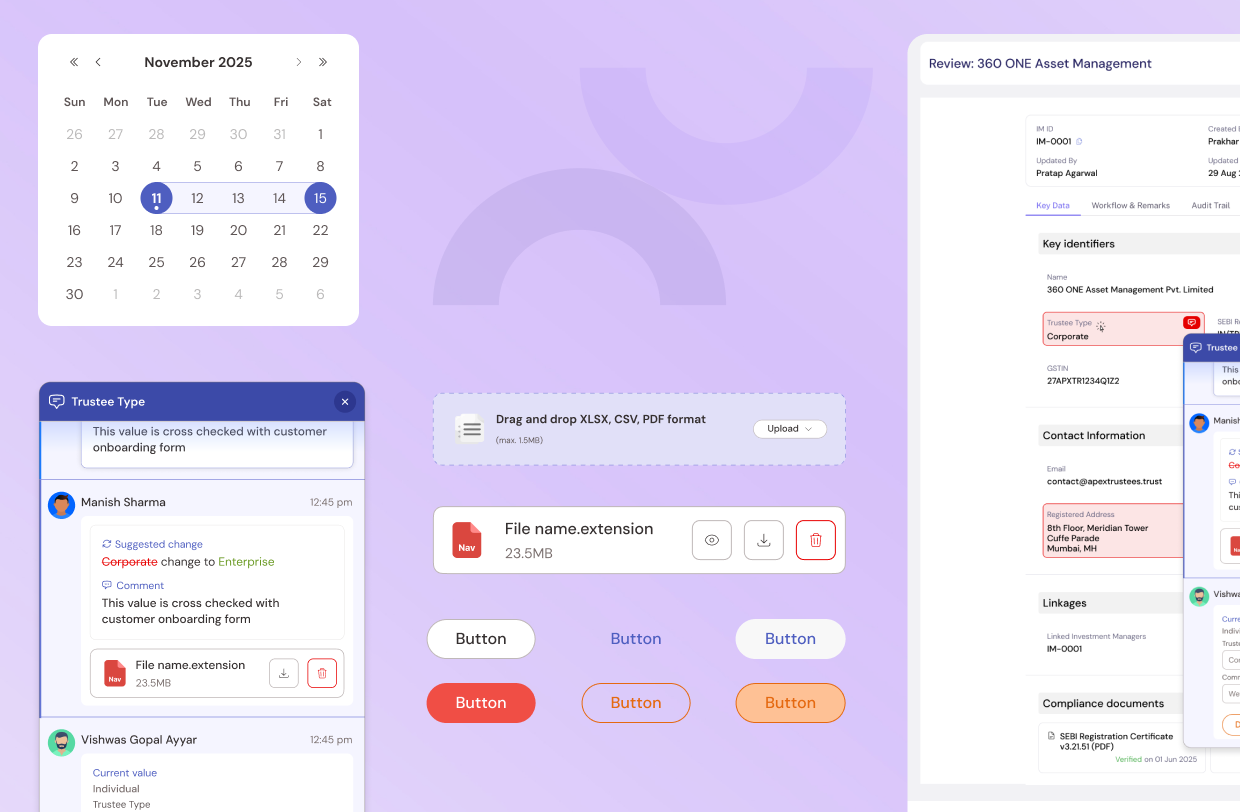
- Build side-by-side review, approval remarks, and audit trails
- Design role-based dashboards and operational queues
- Create standardised data capture and export-ready workflows
RPS Approach
Research, Structure, Validation
Our approach followed the same core principle used in complex enterprise redesigns: understand the operations deeply before designing the interface.
1
Problem Understanding & Workflow Mapping
We focused on understanding the RTA ecosystem, entity relationships, approval logic, and regulatory dependencies.

2
System Thinking & Component Patterns
3
UI Refinement & Experience Layer
User Insight & Persona
Understanding the Operations User
The primary user for the Nuvama RTA System is an experienced RTA operations professional who manages high-volume, compliance-sensitive workflows on a daily basis. Their role requires speed, accuracy, and constant coordination across investors, AMCs, internal teams, and registrars.
For this user, the platform is not just a data-entry tool. It is a system that must help them track requests, process transactions, validate information, manage approvals, reduce errors, and maintain regulatory discipline without slowing down day-to-day operations.
Key User Problems
Slow paper-based workflows
User often deals with processes that depend on physical documents, manual checks, and offline coordination. This slows down request processing and creates unnecessary operational dependency.
Lack of centralized visibility
Investor requests, approval statuses, pending tasks, and transaction updates are not available in one unified view. This makes it difficult to track what is pending, what is approved, and what needs immediate attention.
Manual data entry and duplication
Repeated data entry across forms and systems increases the risk of operational errors, duplicate records, and inconsistent information.
Communication gaps
Internal teams often depend on calls, emails, or manual follow-ups to clarify status or resolve exceptions. This creates delays and reduces accountability.
Difficulty handling transaction peaks
During high-volume periods, User needs faster workflows, better prioritization, and clear task visibility to avoid backlogs and missed actions.
Quote Creation
Agents cannot edit and Copy quotes must recreate from scratch.
Components
Design System
A modular design approach focused on flexibility and performance. Enables faster interactions and a cohesive user interface.
Key Improvements
From Manual RTA Operations to a Centralised Intelligent Platform
The biggest innovation was the move from fragmented operational handling to an all-in-one, future-ready RTA platform
Compliance embedded into workflows
Instead of checking compliance at the end, regulatory validations are considered directly within the operational journey.
Validation-first data entry
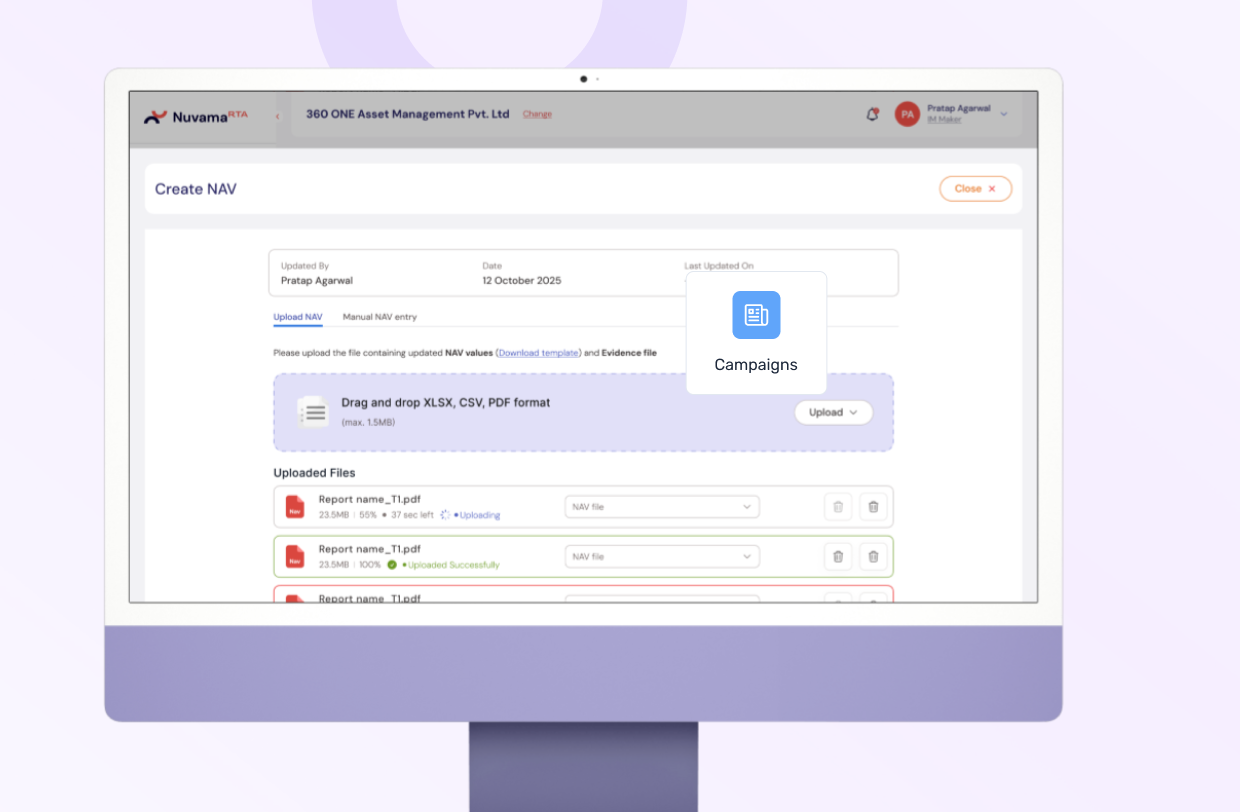
The platform uses CodeMaster-driven dropdowns, format checks, duplicate checks, mandatory field rules, and inline validation messages to reduce errors at the point of entry.
Role-aware dashboards
Dashboards can include daily collection summaries, pending applications, exception items, regulatory alerts, pending approvals, ageing indicators, and approval statistics.
One consistent maker-checker model
A consistent maker-checker model ensures every created or updated record is reviewed before approval. It blocks self-approval, captures checker remarks, and maintains a full audit history for traceability.
Central Information Master
The platform introduces the idea of a Central Information Master, where validated details from reliable sources can be stored and reused across workflows. This reduces repeat entry and improves trust in the data.
Future-ready integrations
The system is proposed to integrate with sources such as KRA, CKYC, Depository, Bank, Fund Accountant, and other input systems. This makes the platform more automated, accurate, and scalable.
Refinement
Experience Design Highlights
Details That Make Operations Faster and Safer
Centralized Workflow Management
All operational records follow a consistent structure with standardized actions, approval stages, and validation flows. This improves clarity, reduces operational dependency, and enables teams to process transactions more efficiently.
Checker Inbox
Checkers get a dedicated review space where they can see pending records, compare changes, review supporting information, approve, reject, and add remarks.
Audit Trail
Every create, update, delete, approval, and rejection action is logged with user, timestamp, and status. This supports compliance, internal audit, and accountability.
Impact
What the Platform Enables
Better operational control
Operations teams get a single platform to create, manage, validate, approve, and audit all core AIF records.
Reduced errors and rework
Real-time validations, controlled dropdowns, uniqueness checks, and source-based integrations help reduce incorrect entries and duplicate records.
Faster decision-making
Dashboards, queues, filters, and status indicators make it easier to see what is pending, what is blocked, and what needs immediate action.

Stronger compliance readiness
Regulatory checks, audit logs, approval trails, and standardised reporting make the system more prepared for internal and external audits.
Scalable foundation for future modules
The platform starts with masters and operations workflows but can scale into investor onboarding, communications, transaction processing, reporting, and self-service journeys.
Wrap-up
Building the Backbone for Digital AIF Operations
The Nuvama RTA System is not just an operations portal. It is the foundation for a more accurate, transparent, and scalable AIF servicing ecosystem.
By combining structured master data, maker-checker governance, regulatory validation, operational dashboards, audit trails, and future-ready integrations, the platform helps move RTA operations from a manual and fragmented model to a more intelligent and controlled digital system.