Agentic AI differs from the AI most designers already use because it acts rather than suggests, completing multi step tasks without being prompted at each turn. The practical change for a designer is that the job shifts from making every artifact to briefing, reviewing, and owning work that something else produced.
The shift already happened. Weekly AI use among designers went from 54% to 91% in a year.
The working model is delegate, review, own. Routine work goes to the agent, judgment stays with you.
Agents fail on scoping and ownership, not capability. Gartner expects over 40% of projects canceled by 2027.
Research finds designers want agents on mundane work, with some tasks left alone entirely.
The unlock is context. An agent with your design system produces usable work. Without it, generic output.
Introduction
Agentic AI is software that plans and executes multi step work toward a goal instead of responding to one prompt at a time, which is what separates a coworker from a tool. For a designer the difference is felt in the verb: a tool waits to be used, an agent goes and does something and comes back with a result you have to evaluate.
That changes the shape of the job more than the output. Reviewing work you did not make, writing briefs precise enough for something that cannot read the room, and owning results you did not produce are management skills, and most designers were never trained in them. This article covers where designers actually are, a working model for delegation, what to hand over, and how to start this week.
What Makes an Agent Different From a Tool
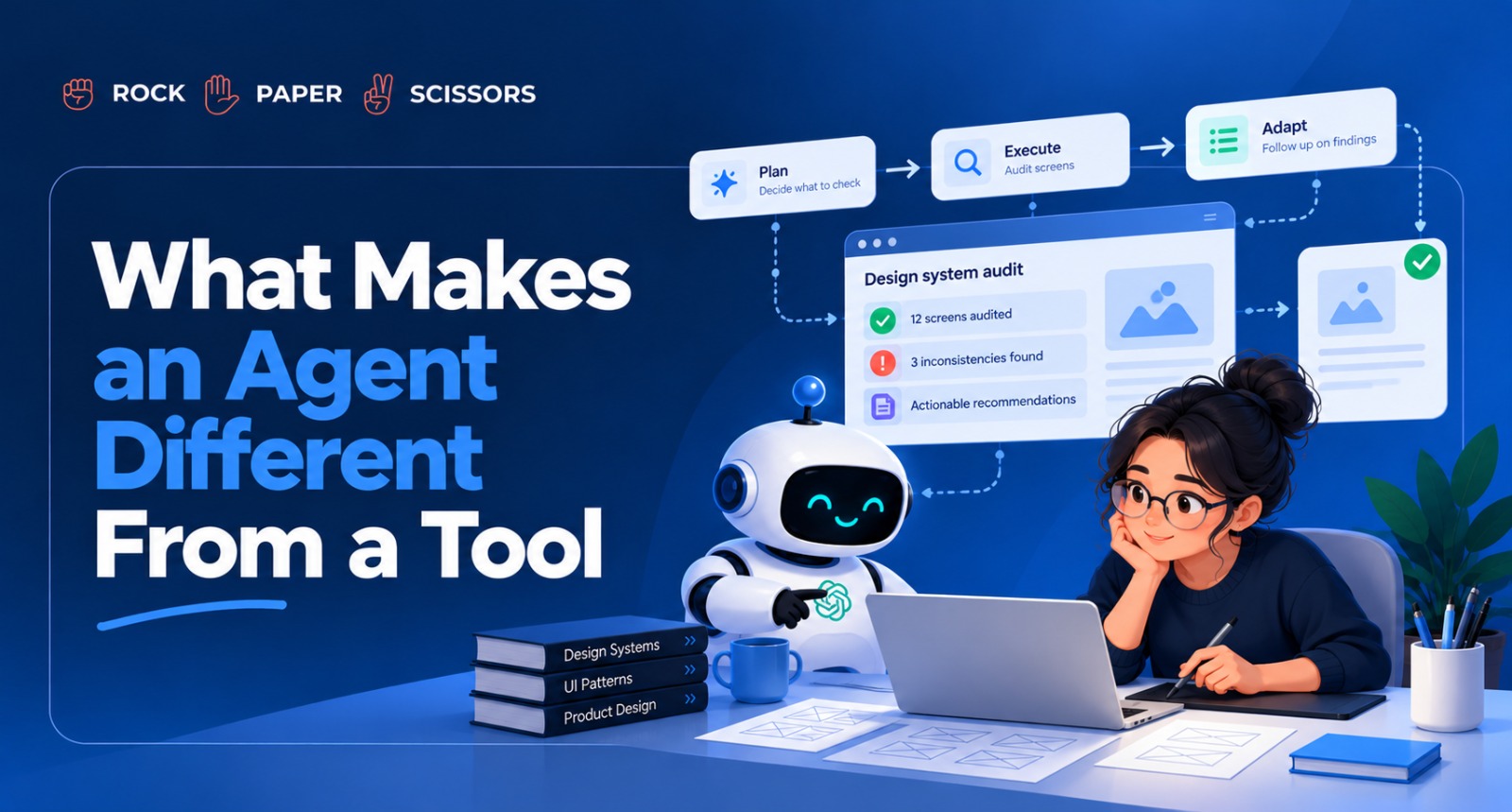
An agent is distinguished by autonomy over multiple steps: it plans a sequence, executes it, and adapts, rather than returning one output per instruction.
The distinction matters practically, not philosophically. When you ask an image tool for a hero image, you get an image and you decide what happens next. When you ask an agent to audit a product’s screens against the design system, it decides what to check, checks it, follows up on what it finds, and returns a report. You were not in the loop for those decisions. You are in the loop for the result.
Be skeptical of the label. Gartner has flagged the practice of “agent washing,” where existing assistants, chatbots, and automation are rebranded as agentic, and estimated that only around 130 of the thousands of vendors claiming agentic capability were building anything that deserved the name. The test is simple: if it needs you at every step, it is a tool with a conversational interface.
Where Designers Actually Are Right Now
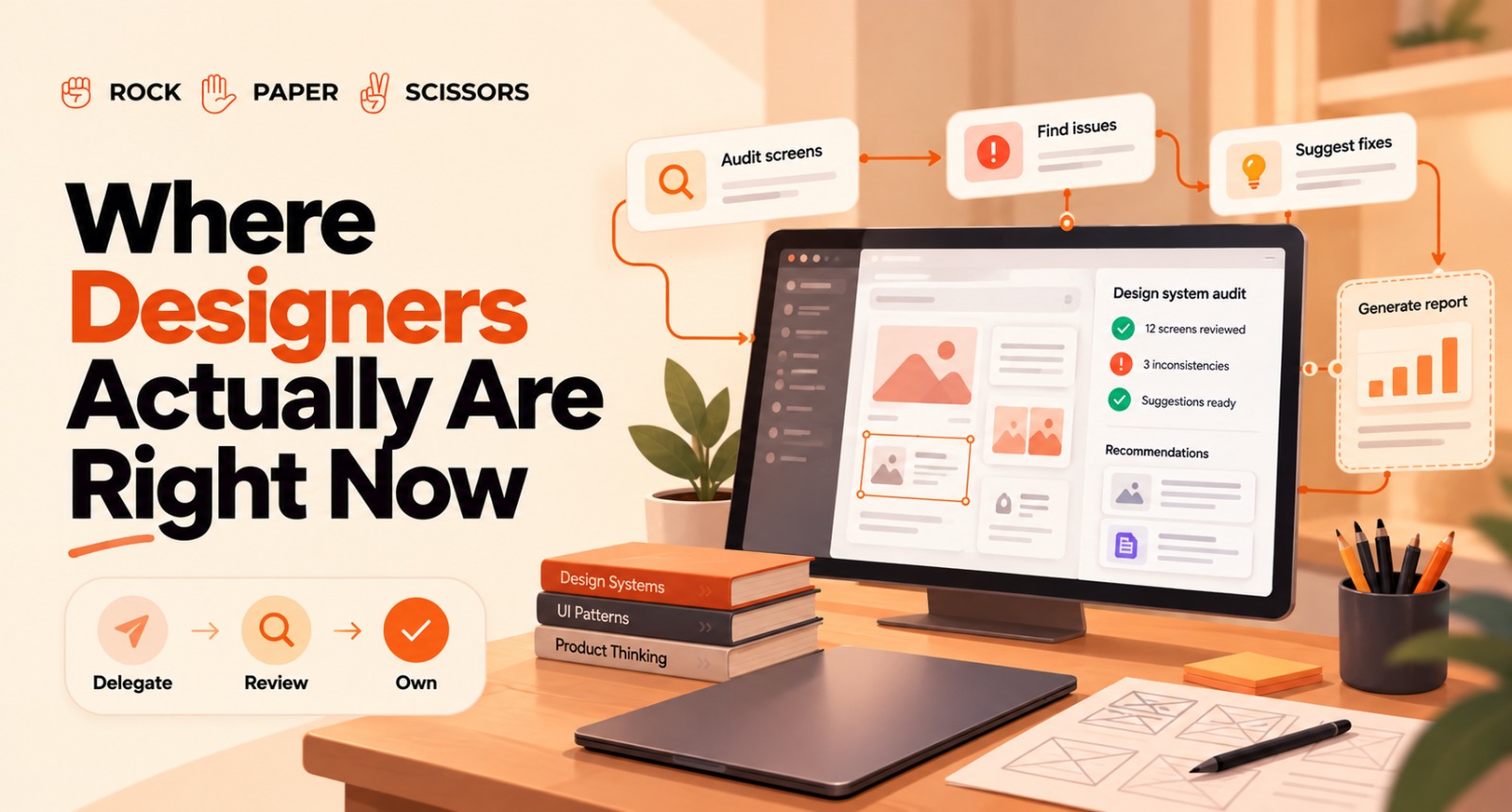
The adoption question is settled, and the numbers moved faster than most teams noticed.
The AI in Design 2026 report from Designer Fund and Foundation Capital, based on a survey of more than 900 designers across 60 countries plus interviews and case studies with teams at Anthropic, Framer, Linear, Notion, Shopify, Sierra, and Stripe, found weekly AI use for design tasks rose from 54% to 91% in a single year, with 75% using it daily. The average designer now uses seven off the shelf AI tools regularly, up from three.
Two findings from that report matter more than the adoption headline.
First, the most common problem designers report is unreliable output quality, and output quality is the single biggest factor in whether a tool gets kept. That is a review problem, not a capability problem, and review is a skill you can build.
Second, designers are increasingly building their own small tools and orchestrating agentic workflows that let non designers produce on brand work from prebuilt design system components. That is the clearest picture of the new job available: the designer defines the system and the guardrails, and other people plus agents work inside them.
Delegate, Review, Own
The operating model converging across disciplines is three words, and it maps onto design work cleanly.
Engineering leadership has been describing this shift as a move from doing every task to orchestrating, reviewing, and governing agents, where routine and reversible work is delegated while architecture, intent, and consequential decisions stay in human hands. Substitute design words and the model holds without modification.
Delegate the work that is repetitive, checkable, and cheap to undo
Producing variants, auditing screens against tokens, drafting documentation, generating states you already defined, reformatting for platforms.
Review against explicit criteria rather than taste
“Does this follow the rules we set” is answerable by anyone on the team. “Does this feel right” is not, and it does not scale past you.
Own the outcome regardless of what produced it
If an agent generated a screen that shipped with a contrast failure, that is your failure. Ownership is the part that does not delegate, and being clear about it is what keeps the arrangement honest.
The reversibility test is the useful filter. Ask what happens if this is wrong and nobody notices for a week. If the answer is a small fix, delegate it. If the answer is a rebuild or a bad decision baked into the roadmap, keep it.
What to Hand Over, and What Stays Yours
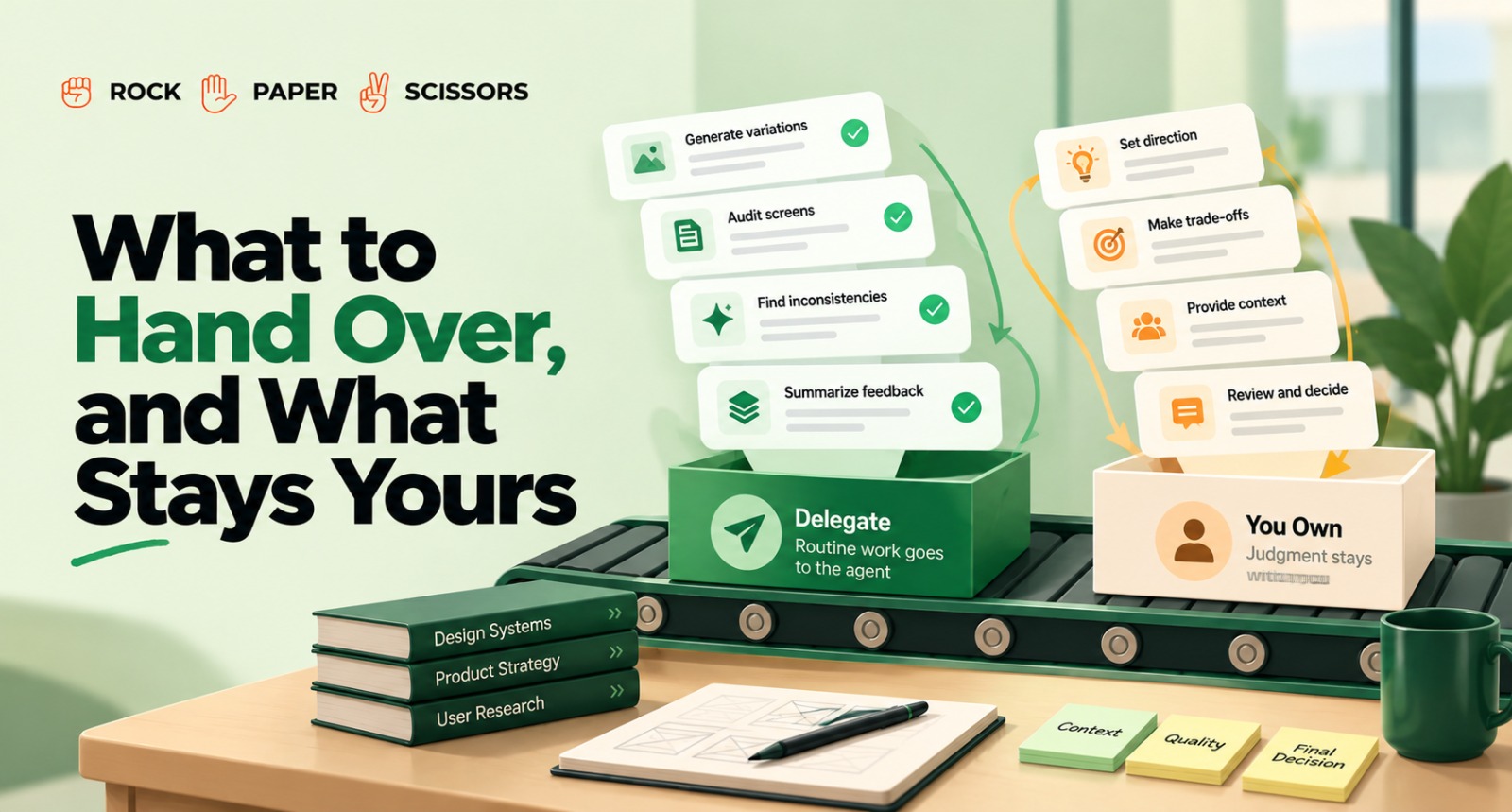
Research on how designers actually want to work with agents is blunter than most vendor material.
A 2025 study on design workflows in agentic AI futures concluded that agents should support ideation and ease mundane work, while other tasks are treated as sacrosanct for designers to do themselves. The authors argue that the balance of authority and creative agency is the central design question, and that vendors should ask whether automation is even appropriate for a given task rather than trying to automate the whole workflow.
| Task | Delegate? | Why |
|---|---|---|
| Generating component variants from a defined pattern | Yes | Rules exist, output is checkable, mistakes are cheap |
| Auditing screens for token compliance | Yes | Mechanical comparison, better done exhaustively than by eye |
| Drafting component documentation | Yes | You edit rather than write, and the agent has the source |
| First pass layout from a defined brief | With review | Useful starting point, needs a designer to make it specific |
| Synthesizing research notes into themes | With review | Fast, but it will smooth over the outlier that mattered |
| Deciding what the product should feel like | No | There is no correct answer to check against |
| Deciding which user problem to solve | No | Judgment about people, not pattern completion |
| Talking to users | No | The value is in what you notice, which does not survive a transcript |
The row worth arguing about is research synthesis. An agent will find the themes and miss the one participant who said something nobody expected, which is often where the actual insight was. Use it to organize, not to conclude.
How to Start This Week
Treat the agent like a new hire, because the failure modes are the same ones you get from bad onboarding.
Give it one job with a name
Not “help with design.” Something like “check every new screen against our token definitions and flag violations.” Scope is what makes review possible.
Write it a brief the way you would brief a junior designer
What good looks like, what the constraints are, what to do when unsure, and what to never touch. Vague briefs produce average work from people and from agents, for the same reason.
Give it your design system as context
This is the single biggest quality lever available. An agent with your tokens and component definitions produces work in your system. An agent without them produces the statistical average of the internet, which is where AI slop comes from.
Review the first ten outputs properly, then set the bar
You are calibrating, not inspecting forever. If output quality is the top complaint in the field, then the review loop is where the job now lives.
Keep a decision log
Write down what you delegated, what came back, and what you changed. In three months this is the document that tells you where the line actually sits, rather than where you assumed it would.
At RPS the pattern that has held up best is exactly this: agents work inside a defined system, on tasks with a checkable answer. Our component generation and brand application work runs against a token structure rather than against a prompt, which is what makes the output reviewable instead of merely plausible. Where we have automated internal operations, the same rule applies, since a task with a clear input and a clear output is a task an agent can own.
Why Most of This Fails, and How Not To
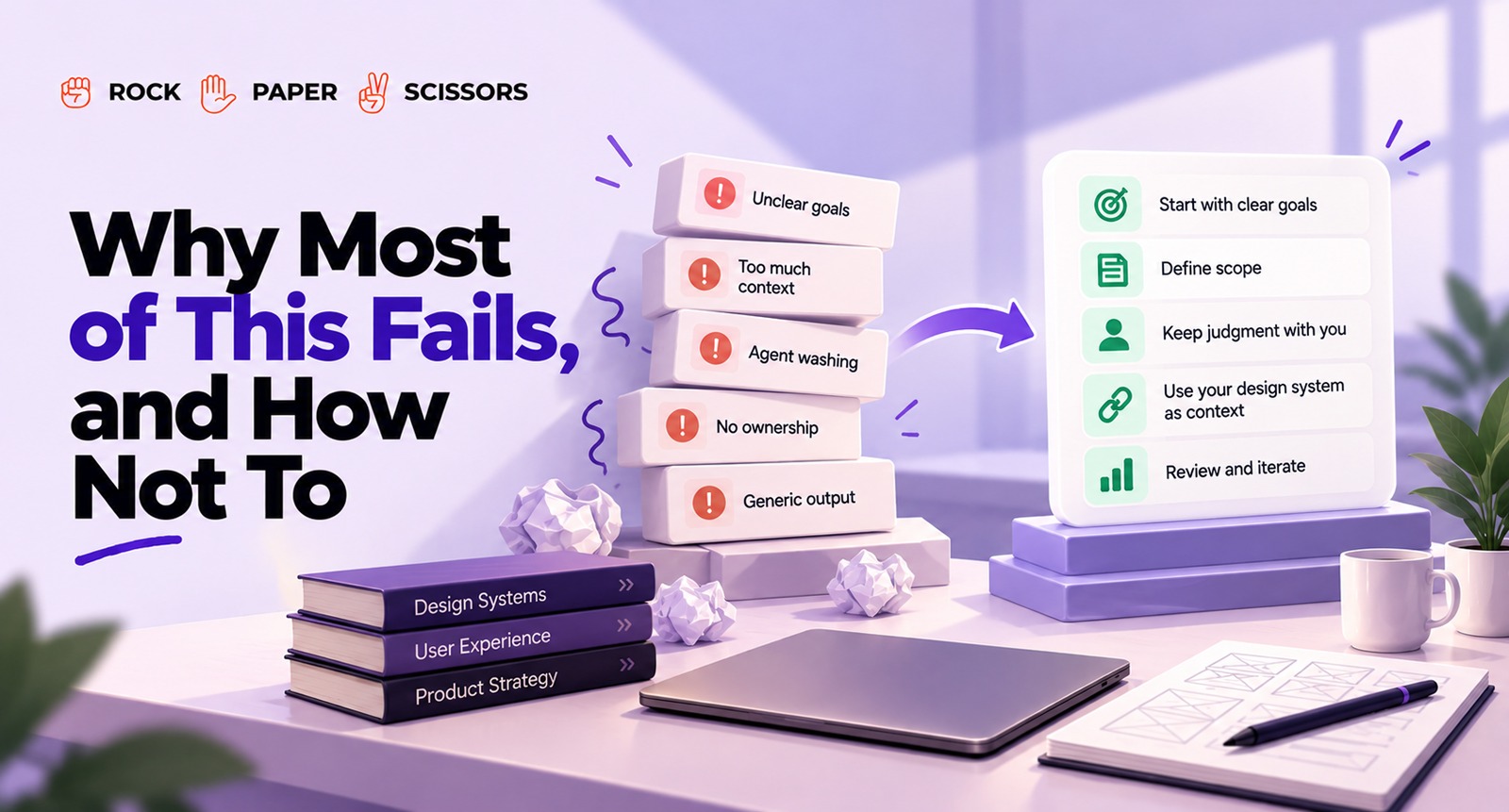
The failure rate is high and the reasons are not technical, which is good news for anyone willing to be organized.
Gartner predicts that more than 40% of agentic AI projects will be canceled by the end of 2027, citing escalating costs, unclear business value, and inadequate risk controls. Model capability is not on that list. Every one of those causes is a scoping and ownership problem, which means the fix is a defined job, a defined measure of success, and a named human who can stop it.
For a design team, the practical version of that is three questions before you start. What specific task is this agent doing. How will we know if it did it well. Who reviews the output and who can turn it off. A team that cannot answer all three is running an experiment, which is fine, as long as nobody calls it a workflow.
There is also a reasonable counterargument worth taking seriously. Some practitioners hold that delegating early stage work removes the productive struggle where design judgment actually forms, and that junior designers who never make the first ten bad versions do not develop the instinct to recognize the good one. We think that risk is real and specific to early career designers rather than general. The mitigation is to delegate what is mechanical and protect what is formative, which is a deliberate choice a team has to make rather than something the tooling decides for it.
Our writing on where AI belongs in a design process covers the broader workflow, and our guide to building a UI design system covers the context layer that makes any of this work.
FAQ
What is agentic AI in design?
Agentic AI plans and executes multi step design tasks toward a goal rather than returning one output per prompt. In practice it means asking for an outcome, such as auditing screens against a design system, and receiving a completed result you review rather than a suggestion you act on.
How is an AI agent different from a design tool?
A tool responds to each instruction and waits. An agent makes intermediate decisions on its own and returns a finished result. The practical test: if you are needed at every step, it is a tool with a conversational interface, regardless of how it is marketed.
What design tasks should not be given to an AI agent?
Anything without a correct answer to check against. Deciding what problem to solve, what the product should feel like, and talking to users directly. Research supports keeping some work with designers entirely, while using agents for mundane tasks and ideation support.
Will agentic AI replace UX designers?
The evidence points to role change rather than replacement. Adoption rose sharply while the reported bottleneck became output quality, which is a review problem requiring judgment. The work shifts toward defining systems, briefing precisely, and owning outcomes rather than producing every artifact.
Why do most agentic AI projects fail?
Gartner attributes cancellations to escalating costs, unclear business value, and inadequate risk controls, not to model capability. For design teams that translates into three missing things: a specific task, a definition of good output, and a named person who reviews the work and can stop it.
How do I get better output from an AI agent?
Give it context and constraints before you give it a task. An agent with your design tokens and component definitions produces work inside your system. The same agent without them produces generic output, because it defaults to the most common patterns in its training data.
Conclusion
The interesting change is not that agents can produce design work. It is that a designer’s leverage now comes from how well they define systems, write briefs, and review work they did not make. Those are management skills arriving in a craft role, and the people who build them early will be doing noticeably different jobs than the people who do not.
Start smaller than feels worthwhile. One task with a clear definition of done, one reviewer, one log of what you changed and why. In a month that log tells you where the line between delegated and owned actually sits on your team, which is information no report can give you. The teams getting value from this are not the ones with the best tools. They are the ones who decided what the agent was for.
Let’s talk product.