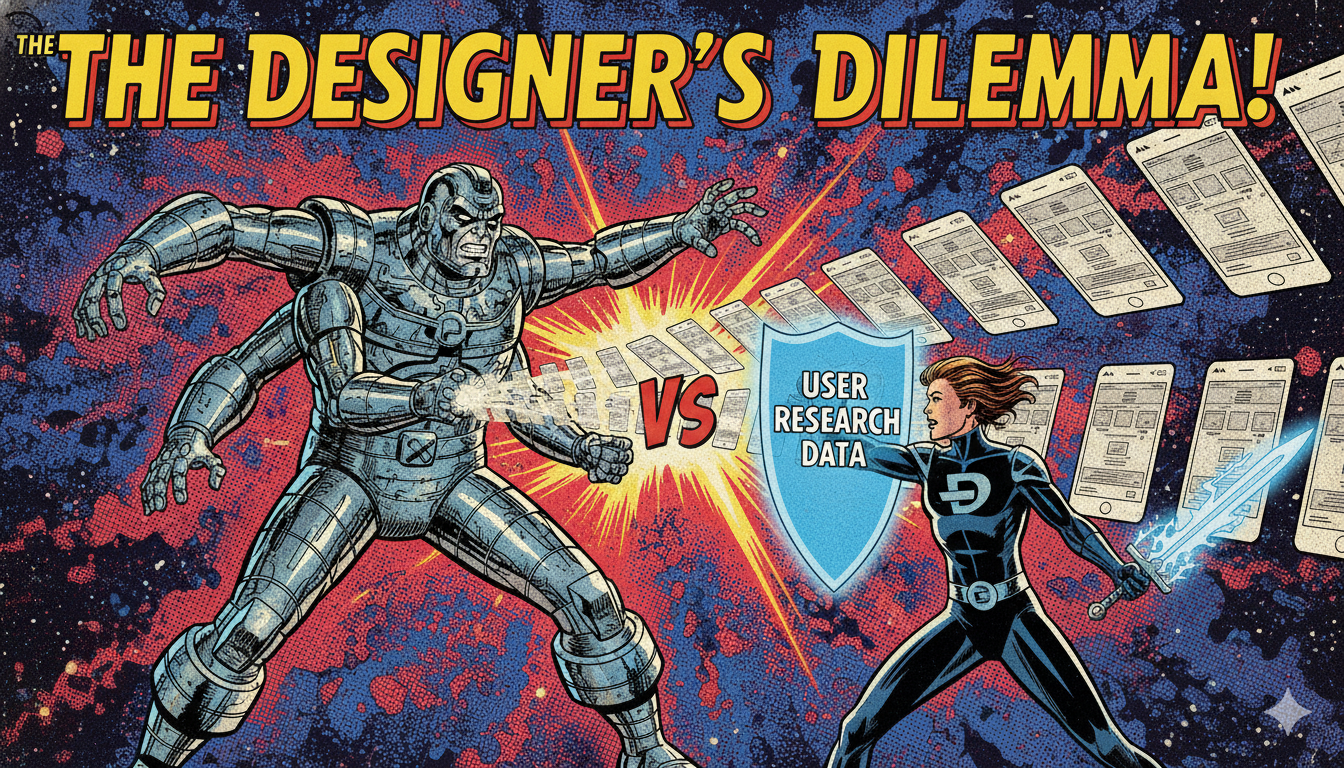
AI is disrupting design but not designer demand. Learn why AI struggles with strategy, which designers will thrive, and how to evolve before the market shifts.
AI-generated design is everywhere. Paste a prompt, get a UI. Seconds instead of weeks. No revisions. No meetings. Naturally, designers are nervous. But here’s the uncomfortable truth that nobody wants to admit: AI isn’t killing designer demand. It’s killing a specific kind of designer. And that kind was already becoming obsolete.
The panic makes sense on the surface. Tools like Midjourney and Figma’s AI features are getting better every month. Generated landing pages look respectable. Dashboard mockups arrive in seconds. For someone whose value proposition is speed and visual execution, this feels existential. But if you zoom out and look at what AI actually does versus what design actually requires, the picture gets much more interesting—and much more hopeful for designers who understand the difference.
What AI Can Actually Do (And Where It Stops Dead)
Today’s AI tools are impressively good at generating basic UI patterns. Landing pages? AI handles them beautifully. Marketing sites with proven conversion patterns? AI nails them. Simple dashboards with standard layouts? AI produces them faster than you can set up your Figma file. Given a halfway decent prompt, AI can produce something visually acceptable—sometimes even genuinely impressive.
But here’s where it breaks: acceptable isn’t the same as effective. AI can assemble components. It can remix patterns. It can imitate style flawlessly. What it cannot do is understand why a product exists in the first place. It doesn’t know the user problem that matters most. It doesn’t understand the business trade-off between feature completeness and cognitive load. It has no idea about regulatory constraints, internal politics, or long-term product vision. Design is fundamentally decision-making under constraint, and AI has no stake in the outcome. It can generate options, but it can’t weight them.
The Real Pattern: AI Is Commoditizing Commodity Design
The real threat isn’t to “designers” as a whole. The threat is to commoditized design. If your value is pushing pixels, executing instructions without questioning them, or delivering visuals without understanding context, AI will undercut you—fast. Take simple brochure websites. AI handles these perfectly. Many clients don’t need more than that. Those jobs will disappear. And honestly? They probably should. The market doesn’t need thousands of junior designers executing mid-level pixel-pushing work at human salaries when AI can do it cheaper.
But now look at complex SaaS products. Multi-step onboarding flows. Permission-based dashboards that change based on user role. Edge cases. Conflicting user goals where you have to choose which one matters more. AI struggles here because complexity isn’t visual—it’s conceptual. We’ve tested AI-generated flows for enterprise tools. They look visually fine until you actually try to use them. Then everything breaks: wrong prioritization, missing states, no understanding of user anxiety or risk tolerance. AI doesn’t fail loudly. It fails subtly. And subtle failures—the kind that make power users frustrated or new users confused—those are expensive. They cost retention. They cost support tickets. They cost revenue.
The Shift: From Delivery to Decision-Making
Designers who survive the AI era won’t be the fastest executors. They’ll be the best decision-makers. The role evolves from “here’s the design” to “here’s why this is the right design, given what we know about users, constraints, and trade-offs.” That requires skills AI doesn’t have: defining the problem before solving it, choosing what not to design, making trade-offs explicit, defending decisions with evidence.
Prompting is a skill—and it’s not obvious. Everyone assumes asking AI for a design is easy. It’s not. Getting useful output requires clear thinking, precise constraints, iterative refinement, and taste. Bad designers get bad AI output faster. Good designers get leverage. The real opportunity is having AI handle repetitive layouts, variations, exploration, and documentation—freeing designers to focus on strategy, user research, system thinking, and business alignment.
The Timeline and the Middle Layer
Over the next 3–5 years, AI will start replacing mid-level execution-heavy design roles. Not senior strategists who shape product vision. Not junior learners soaking up fundamentals. The middle—designers who were competent executors but didn’t develop deeper judgment. Designers who adapt now—learning AI tools, sharpening judgment, owning decisions—will win disproportionally.
AI won’t replace designers. It will replace designers who mistake output for value. The future belongs to designers who decide—not just deliver.
Also Read: Mobile First Design Myth: Why It Excludes Billions & What to Do Instead